







Glossary of Mining Terms

A reference table for basic element data, with related information on average crustal abundances, isotopes, water quality standards, common minerals and more.  
                                           

Posts Tagged ‘mining companies’

How the Ancient People Initiate the Mining Techniques

Tuesday, April 20th, 2010

The process of mining the earth and finding the metals, minerals, etc and again making the earth to return back to its original state consists of different steps. Generally, mining techniques can be broadly classified into two types, they are Surface Mining and Underground Mining.

In pre-historic period, when the people had found metals like copper, iron on or close to earth surface, they used to manufacture some tools and weapons.

The ancient known mine is the “Lion Cave” which is in Swaziland. Ancient people used hammers, crude picks, etc. But they found very difficult to find the metals or any other precious stones which was in too deep. So they slowly started to invent new ideas to make the work simple. Since there is no blasting method available in that period, they first used to keep fire on the hard rocks to make it soft then they used water to cool it up and so they had broken those hard rocks easily.

The slaves, prisoners of war and the people who did criminal things had forced to work on the mining areas. And the kids were used to carry the ores from the underground mining area to the outer surface. Then the people who are so weak to work underground had made to separate the rich and poor metals.

In some countries they used “Black Powder” to disclose ore veins and earth to loosen. Then as the development occurs, the people have found a plenty of techniques to find the metals, minerals and other precious stones.

Some of the ancient mining techniques were,

  • Fire setting
  • Hydraulic mining
  • Reverse overshot water-wheels

Coal mining industry

Monday, May 18th, 2009

The coal mining industry segment produces coal, a fossil fuel that is used primarily for electric power generation and in the production of steel. Like oil, coal is formed over millions of years from plant and animal matter, but unlike oil, coal is a solid, and therefore miners must go into the earth to recover it. Many coal seams are located close to the surface, however, which makes the extraction of this resource easier.

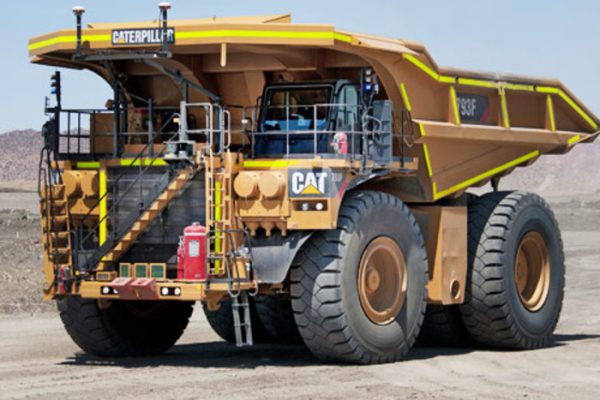
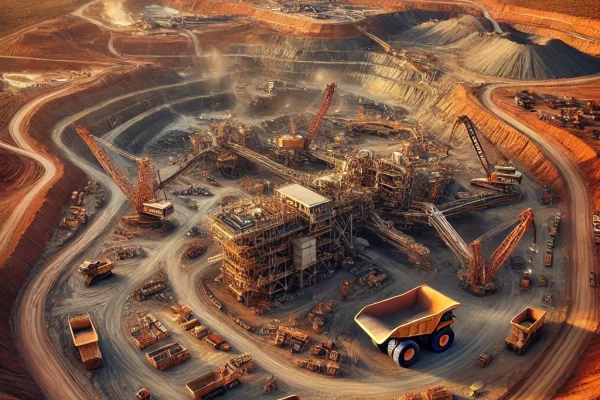
Surface mining of coal typically uses the method known as strip mining, which is usually more cost-effective than underground mining and requires fewer workers to produce the same quantity of coal. In strip mining, workers use huge earthmoving equipment, such as power shovels or draglines, to scoop off the layers of soil and rock covering the coal seam. Once the coal is exposed, it is broken up by using explosives, and then smaller shovels lift it from the ground and load it into trucks. Mining companies are required by Federal, State, and local laws to restore the mined land after surface mining is completed; as a result, the overburden and topsoil are stored after removal so that they can be replaced and native vegetation replanted.

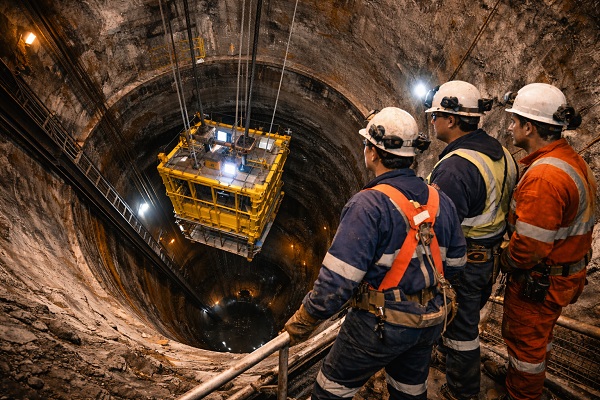
Underground mining is used when the coal deposit lies deep below the surface of the earth. When developing an underground mine, miners first must dig tunnels deep into the earth near the place where the coal is located. Depending on where the coal seam is in relation to the surface, tunnels may be vertical, horizontal, or sloping. Entries are constructed so that miners can get themselves and their equipment to the ore and carry it out, while allowing fresh air to enter the mine. Once dug to the proper depth, a mine’s tunnels interconnect with a network of passageways going in many directions. Using the room-and-pillar method, miners remove sections of the coal as they work the coal seam from the tunnel entrance to the edge of the mine property, leaving columns of coal in place to help support the ceiling together with long steel bolts. This process is then reversed, and the remainder of the ore is extracted, as the miners work their way back out. In the case of longwall mining of coal, self-advancing roof supports, made of hydraulic jacks and metal plates, cover the area being mined. As coal is removed, the entire apparatus advances, allowing the ceiling in the mined area to cave in as the miners work back towards the tunnel entrance. Underground mining does not require as extensive a reclamation process as surface mining; however, mine operators and environmental engineers still must ensure that ground water remains uncontaminated and that abandoned mines do not collapse.


HOME    ABOUT US    RESOURCES    FAQ's    CONTACT US    SITEMAP    ENGAGEMENT RINGS
Copyright © 2003 YourCompany Inc. All rights reserved.