



A
reference table for basic element data, with related information
on average crustal abundances, isotopes, water quality standards,
common minerals and more.
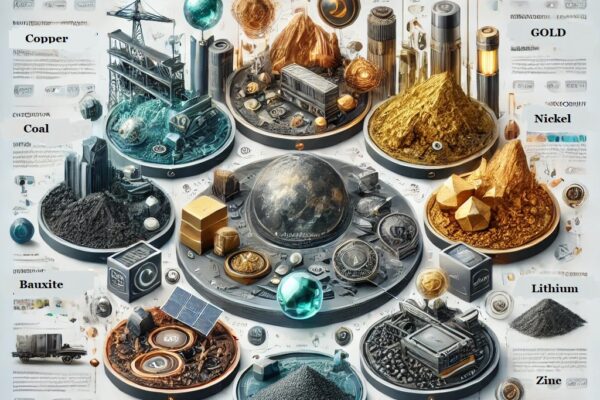
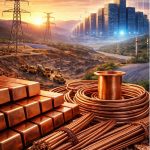
The metal ore mining industry segment covers the extraction of metal ores, primarily gold, silver, iron, copper, lead, and zinc. These naturally occurring minerals have a variety of industrial purposes: gold and silver are primarily used in jewelry and high-end electronics, iron is used to produce steel, copper is the main component of electrical wiring, lead is used in batteries, and zinc is used to coat iron and steel to reduce corrosion and as an alloy in the making of bronze and brass.
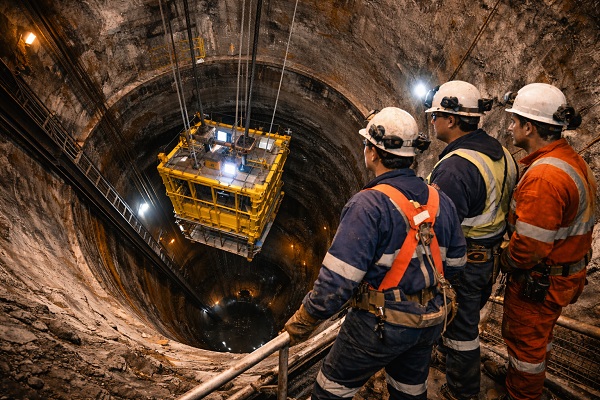
Most metals do not exist in concentrated form but rather in small traces in rock called “ore”. Indistinguishable from regular rocks to the untrained eye, some ores are currently mined that contain only a fraction of a percent of metal. As a result, a massive amount of rock must be extracted from the ground in order to obtain a useable amount of metal. As a result of this, and because metal ores are less common than coal, metal mines can be much larger than coal mines and operate in more extreme environments—while coal mines are rarely more than a few hundred feet underground, gold mines can be over a mile below the surface.
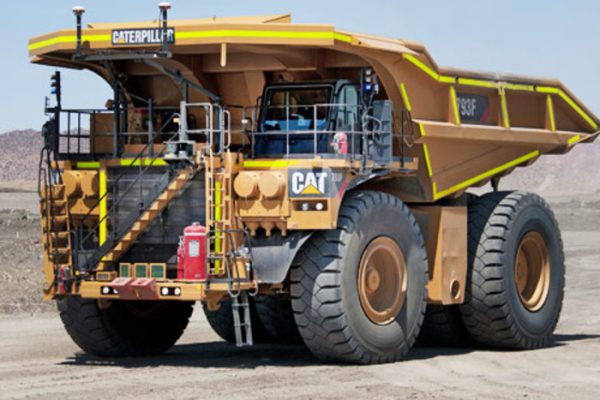
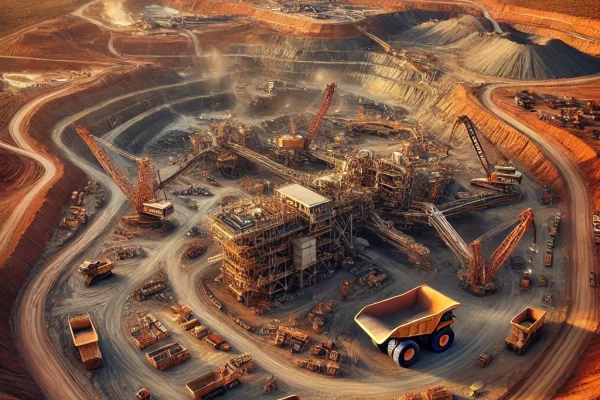
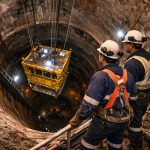
Like coal mines, metal ore mines are found in both surface and underground varieties, depending on where the ore deposit is located. In addition to strip mining, surface ore mines also use the open-pit mining technique. These mines are huge holes in the ground that are mined by blasting rock from the sides and bottom with explosives, carrying out the broken up material in trucks, and then repeating the process. Open pit mines can grow to be hundreds of feet deep and several miles wide. Underground mining of ore is less common, typically only occurring when rich veins of ore are discovered or mineral prices are high enough to justify the added expense.
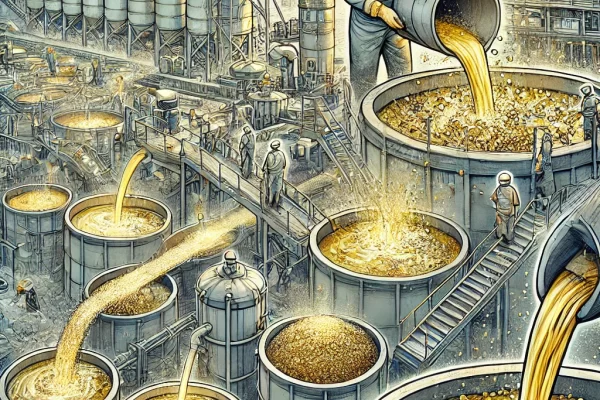
A significant amount of processing is needed to convert ore into usable metal. The mining industry includes initial mineral processing and preparation activities that are located together with mines as part of the extraction process. Further processing is classified under the primary metal manufacturing industry.
The oil and gas extraction segment produces the petroleum and natural gas that heat homes, fuel cars, and power factories. Petroleum products are also the raw materials for plastics, chemicals, medicines, fertilizers, and synthetic fibers. Petroleum, commonly called crude oil or just oil, is a liquid formed under ground from the decay of plants and animals over millions of years through extreme heat and pressure. Occasionally, this decaying material becomes trapped under a layer of impermeable rock that prevents it from dispersing and creates a pocket of oil. Similar processes also produce natural gas, which can be found mixed with oil or in separate deposits. Finding and extracting the oil and gas in these pockets is the primary function of this industry segment.
Using a variety of methods, on land and at sea, small crews of specialized workers search for geologic formations that are likely to contain pockets of oil or gas. Sophisticated equipment and advances in computer technology have increased the productivity of exploration. Maps of potential deposits now are made using remote-sensing satellites. Seismic prospecting—a technique based on measuring the time it takes sound waves to travel through underground formations and return to the surface—has revolutionized oil and gas exploration. Computers and advanced software analyze seismic data to provide three-dimensional models of subsurface rock formations. Another method of searching for oil and gas is based on collecting and analyzing core samples of rock, clay, and sand in the earth’s layers.
After scientific exploration studies indicate the possible presence of oil, a well must be drilled to prove oil is there. An oil company selects a well site and installs a derrick—a tower-like steel structure—to support the drilling equipment. A hole is drilled deep into the earth until oil or gas is found, or the company abandons the effort. Similar techniques are employed in offshore drilling, except that the drilling equipment is part of a steel platform that either sits on the ocean floor, or floats on the surface and is anchored to the ocean floor. Advancements in directional or horizontal drilling techniques, which allow increased access to potential reserves, have had a significant impact on drilling capabilities. Drilling begins vertically, but the drill bit can be turned so that drilling can continue at an angle of up to 90 degrees. This technique extends the drill’s reach, enabling it to reach separate pockets of oil or gas. Because constructing new platforms is costly, this technique commonly is employed by offshore drilling operations.
Once the drilling reaches the oil or gas, extraction can begin as natural pressure forces the oil or gas up through the drill hole to the wellhead, where it enters separation and storage tanks. If natural pressure is not great enough to force the oil to the surface, pumps may be used. In some cases, water, steam, or gas may be injected into the oil deposit to improve recovery. The recovered oil is transported to refineries by pipeline, ship, barge, truck, or railroad. Natural gas usually is transported to processing plants by pipeline. While oil refineries may be many thousands of miles away from the producing fields, gas processing plants typically are near the fields, so that impurities—water, sulfur, and natural gas liquids—can be removed before the gas is piped to customers. The oil refining industry is considered a separate industry, and its activities are not covered here, even though many oil companies both extract and refine oil.