Soft Rock Mining
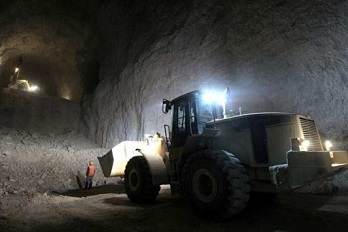
Underground mining (soft rock)
The method of extracting coal, oil shale, potash and other minerals from soft or sedimentary rocks are called underground soft rock mining. In contrast to this is the underground hard rock mining where techniques are used to extract minerals that are hard. This method, called the soft rock mining is used only in places where the deposits in sedimentary rocks are layered and soft. This method is implemented after a careful study and the amount of deposits available in the area. The economic liability of the project is also taken into consideration before going ahead as the investment into the scheme will be large and returns should commensurate with the amount of spend on the project.
Underground soft mining involves blast mining, which is an essential part of mining. In almost all forms of mining we can see that blasting and drilling occurs. It is a method to break the material into smaller parts by blasting technology. Blast design and the execution of this process are equally important in this method. If this method is not executed in the proper way the economics of the mine will be drastically affected. This method is also used in open pit mining method. The blasting of a mine is done to break a large quantity of the block to disintegrate and later remove such blocks by using equipments to carry the minerals to the dump site.
The underground soft mining also made use of short wall method. This method was developed in the 1960's and had lot of advantages. The main advantage of this method was that it can cut the cost of mining by not installing completely the long wall devices. In some cases more flexible short wall mining was done to obtain the benefits of long wall mining .However this method was not very successful in the long run. The short wall method was used to extract the minerals in a comparatively less space but the cost effectiveness is almost the same. The coal skimming was another method introduced to extract coal in a more simple way .This method was much faster and easy when compared to the previous methods. Level surface drilling jumbo called single boom underground drilling jumbo works mainly on the surface of the tunnel. It has the capacity to drill both the bolt hole and the blast hole.
When it comes to mining, the most important factor that has to be taken into consideration is the equipment used for mining. Be it underground or surface mining, the equipment deployed for various types mining differs on the minerals to be extracted and it plays a major role in the successful implementation of the project .By making use of these methods the mining industry is contributing a lot to the economic development of the country.
Mining Methods
Long wall miningis one of the methods involved in this process. It is relatively a long mine ranging from more than 100 to 300 meters. The extraction of coal can be done along the full length of the long wall face depending on the terrain and methods used for mining the mineral. This method has the power to cut the coal into slices of a given width and transport the same to locations from where it can be carried to the industrial units for producing the finished products. The modern long wall face is supported by hydraulic power and it has the capacity to remove the block of coal effectively depending on the length of the block.
The advantages of this long wall mining are that permanent support is needed only in the initial stages of mining that is mainly during installation and recovery operations. The mineral extracted by this process is high without spilling or leakage. The extracted minerals are recovered fully as it can be transported to the nearest dump without much difficulty using modern techniques. The coal is mined systematically by this process which will further help for associated mining operations. In spite of all these advantages, there are few disadvantages which include the high capital cost for equipment, the nature of the long walls and also the system of operation. At times they have to depend on the laborers to carry out successful operations. The manual involvement is necessitated depending on the nature and location of the operations. However, it is necessary to take adequate precaution while involving manpower resources to remove the minerals from such mines.
Room and Pillar mining, otherwise known as the continuous mining. This is one of the safest methods. It is efficient and eco-friendly too. As the name indicates it is a method by which the large pillars of coal are left standing to support the room of the mine. A major portion of the coal is used to stand intact as pillars to maintain the quality of the surface land. By this method the minerals mined are extracted across a horizontal plane and as a result, they create a horizontal display of rooms and pillars. This type of mining is used in mining iron and coal. The selection of the size of the pillars matters a lot in successful room and pillar mining. The size of the room and the pillar are almost equal and if the pillar is larger than the room there is a possibility of valuable materials to be left behind in the process of mining, which will affect the profit of the mining project. If the pillar is small there are chances for the mine to collapse. This is one of the oldest methods of mining.It is necessary to take care to fix the pillar firmly otherwise if one pillar fails this will affect the surrounding pillars and as a result it will lead to the collapse of the mine. To prevent this damage, barrier pillars are created which will prevent the collapse of the mine. The final stage of this process is known as retreat mining. It helps the pillar to be removed or pulled back. The wall of the mine is then allowed to collapse behind the mining area. The removal of the pillar should be done systematically and this will reduce the risk factors involved in mining.
Blast mining - which is an essential part of mining. In almost all forms of mining we can see that blasting and drilling occurs. It is a method to break the material into smaller parts by blasting technology. Blast design and the execution of this process are equally important in this method. If this method is not executed in the proper way the economics of the mine will be drastically affected. This method is also used in open pit mining method. The blasting of a mine is done to break a large quantity of the block to disintegrate and later remove such blocks by using equipments to carry the minerals to the dump site.
Shortwall mining-The underground soft mining also made use of the short wall method. This method was developed in the 1960's and had lots of advantages. The main advantage of this method was that it can cut the cost of mining by not installing completely the long wall devices. In some cases more flexible short wall mining was done to obtain the benefits of long wall mining. However, this method was not very successful in the long run. The short wall method was used to extract the minerals in a comparatively less space but the cost effectiveness is almost the same. The coal skimming was another method introduced to extract coal in a more simple way. This method was much faster and easy when compared to the previous methods. Level surface drilling jumbo called single boom underground drilling jumbo works mainly on the surface of the tunnel. It has the capacity to drill both the bolt hole and the blast hole.
When it comes to mining,the most important factor that has to be taken into consideration is the equipment used for mining. Be it underground or surface mining, the equipment deployed for various types of mining differs on the minerals to be extracted and it plays a major role in the successful implementation of the project. By making use of these methods the mining industry is contributing a lot to the economic development of the country.