Open Pit Mining
Open-pit Mining
Open-pit mining, also known as opencast mining, open-cut mining, and strip mining, means a process of digging out rock or minerals from the earth by their elimination from an open pit or borrow.
The word is used to distinguish this type of mining from extractive methods that need tunneling into the earth. Open-pit mines are used when deposits of commercially helpful minerals or rock are found close to the surface; that is, where the overburden (layer material covering the valuable deposit) is comparatively thin or the material of interest is structurally inappropriate for tunneling. For minerals that happen deep underneath the surface-where the overstrain is solid or the mineral happens as veins in hard rock- underground mining methods take out the precious material.
Open-pit mines that manufacture building materials and dimension stone are usually referred to as quarries. People in few of the English-speaking countries are not likely to make a difference among an open-pit mine and other kinds of open-cast mines, like quarries, borrows, placers, and strip mines.
Open-pit mines are characteristically engorged until either the mineral resource is exhausted, or a mounting ratio of overburden to ore makes more mining uneconomic. When this occurs, the exhausted mines are at times converted to landfills for disposal of solid wastes. Nevertheless, some form of water control is normally required to keep the mine pit from becoming a lake.
Open Cut mines are dug on benches, which portray vertical levels of the hole. These benches are normally on four meter to sixty meter intervals, relying on the size of the machinery that is being utilized. A lot of quarries do not use benches, as they are normally shallow.
Most walls of the pit are normally dug on an angle less than vertical, to avert and lessen damage and hazard from rock falls. This relies on how weathered the rocks are, and the kind of rock, and also how a lot of structural weaknesses happen within the rocks, like a fault, shears, joints or foliations.
The walls are stepped. The inclined part of the wall is called the batter, and the flat part of the step is called as the bench or perm. The steps in the walls help avert rock falls continuing down the entire face of the wall. In some instances additional ground support is needed and rock bolts, cable bolts and shotcrete are utilized. De-watering bores might be used to ease water pressure by drilling horizontally into the wall, which is frequently sufficient to cause failures in the wall by itself.
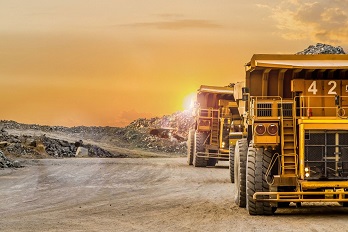
A haul road is located at the side of the pit, forming a ramp up which trucks may drive, taking ore and waste rock.
Waste rock is piled up at the surface, near the edge of the open cut. This is known as the waste dump. The waste dump is also tiered and stepped, to lessen degradation.
Ore which has been processed is called as tailings, and is normally slurry. This is pumped to a tailings dam or settling pond, where the water fades away. Tailings dams may frequently be toxic due to the presence of unextracted sulfide minerals, few types of toxic minerals in the gangue, and frequently cyanide which is utilized to treat gold ore via the cyanide leach method.