SURFACE MINING
Surface mining is a form of mining in which the soil and the rock covering the mineral deposits are removed. It is the other way of underground mining, in which the overlying rock is left behind, and the required mineral deposits are removed through shafts or tunnels.
Surface mining is basically employed when deposits of commercially viable minerals or rock are found closer to the surface that is, where overstrain (surface material covering the valuable deposit) is relatively very less or the material of interest is structurally unsuitable for heavy handling or tunneling (as would usually be the case for sand, cinder, and gravel).
Where ever minerals occur deep below the earth's crust or the overburden is too thick or the mineral occurs as strands in hard rock, Underground mining methods are employed to extract the valuable mineral deposits.
Surface mines are naturally extended until either the valuable deposit is exhausted, or the cost of de-cresting larger volumes of overburden makes further mining an uneconomic option to shoulder.
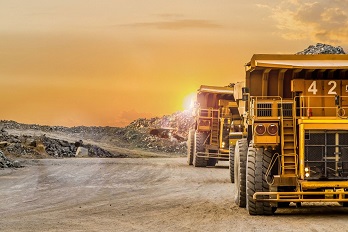
In most types of surface mining, heavy paraphernalia's such as earthmovers are utilized. They 1st remove the overburden the soil and rock above the deposit. Then followed by the huge machines, such as dragline excavators,extract the mineral.
It is a known fact that Mother Earth contributes largely to the wealth of the world. The mining takes place in those areas where the growth of vegetation is very minimal or at times does not exist due to the surface conditions. The most important method used to extract the minerals from the earth is surface mining. It is surprising to notice that 70 percent of the minerals extracted from the earth are through this process. The basic material used for construction purposes like crushed rocks, sand and gravel is obtained through this method.

After the discovery of certain kinds of mineral deposits in a particular area a method has to be evaluated to extract these minerals. The selection is based on technical and environmental aspects and surface mining is preferred to extract the minerals from the surface area. As compared to underground mining this method of mining removes soil and rock overlying the mineral deposit. The equipment used for this process is always heavy such as earth movers, dragline excavators or bucket wheel excavators.
Types of surface mining:
This process involves the method of extracting the mineral by removing soil and rock which are deposited on the surface.Coal and Lignite are the two principle minerals that are extracted through this method. This kind of mining can be done when the mineral to be extracted almost near to the surface.This process is divided into area stripping and contour stripping. This method of striping is common on flat land to extract the mineral over a large area.
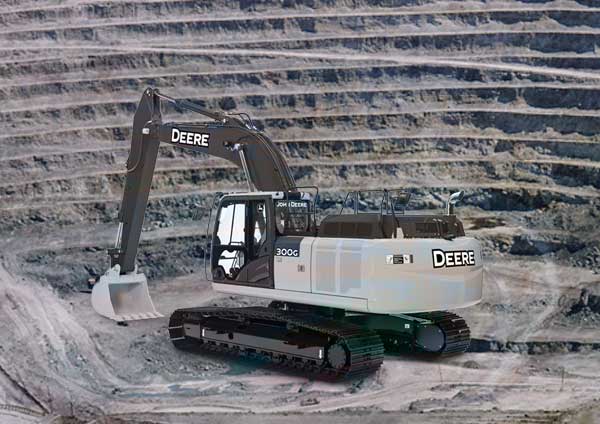
This type of mining involves the extraction of rock or minerals from the earth by forming an open pit. This process differs from the other method which requires digging into the earth. This method of mining is carried out where useful minerals or rocks are found near the surface. When the surface material covering the valuable material is relatively thin this kind of mining is more suitable.
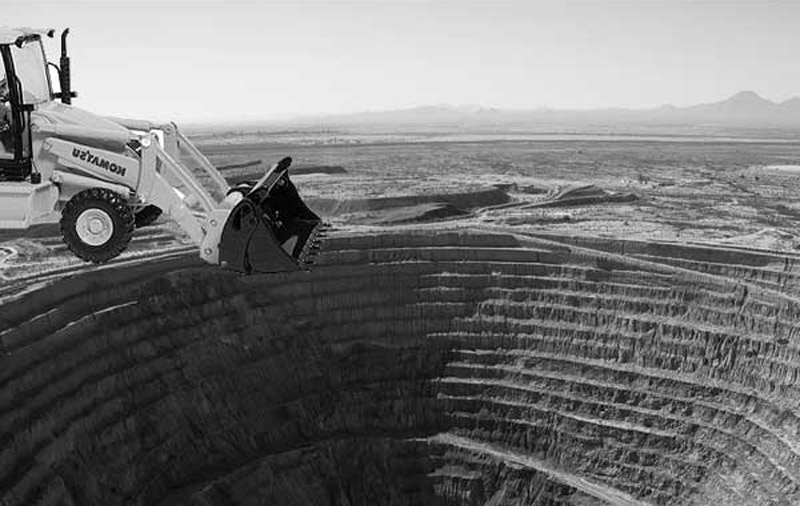
Open cast mines are dug on benches which are usually four to sixty meter intervals and the machinery used depends on the size of the area. The flat part of the wall is known as the bench where as the inclined portion of the sections are known as batter. To prevent the damage from rock falls the walls of the pit has to be dug on less than vertical angle. A crude, temporary road is usually found at the side of the pit for the movement of trucks carrying ore or waste rocks. The waste rocks are always piled up on the borders of the open pit. This waste dump is arranged in rows and stepped to lower the degradation.
The next step is rehabilitation. This is the process by which the land is returned to the original state after the process of mining is done. Various processes are involved to bring it to the original state. Another way is an adaptive use of mines by which the mines are reused and they develop the closed open pit mines into parks. The reclaimed mine sites are used for small economic activities which may also include dumping of sludge waste etc.
Another method involved in this category aims at mining the summit or the long and narrow edge of the mountain. The main mineral extracted by this method is coal. Coal is mined by removing the land above the seams. This method of coal mining is mainly conducted on the Appalachia Mountain in the United States.
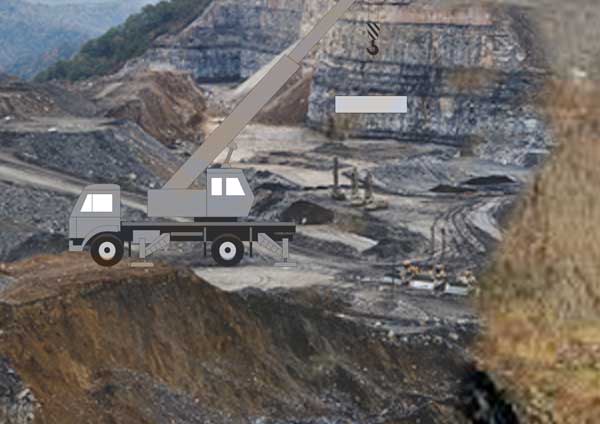
The coal cannot be mined using simple machines. Explosives are used to mine the coal and the excess coals are dumped in the nearby valley. This method is less expensive and requires only a few employees. There is controversy as to whether the coal mining is safe as it is being removed from the mountain top. But the coal industry asserts that it is safer than the underground mining. The environmental studies warn that this process can damage the environment and also the health of human beings. Another positive impact of Mountain mining is that the reclaimed area is suitable for many purposes and the flat terrain can support rapid development for human population. However, the blasting of mountain top releases large amount of dust and tiny materials into the air leading to the pollution that could be a health hazard.
This is a method by which underwater minerals are extracted. It is usually used to make waterways for boats and navigation canals for the passage of container ships to save time. The mineral can be extracted from under water in cheap and efficient way. Oil refining is done mainly by this method.
High wall Mining
High wall mining is another form of surface mining .In this method the Hydraulic Push - beam Transfer Mechanism is used to cut across the earth's surface and extract the coal. In this process the machine penetrates deep into the earth's surface to produce large volume of coal. High wall miners have penetrated to the depth of around a thousand feet into the coal seam and capable of going further with the support of advanced techniques. High wall mining accompanied by water pumping and proper mapping can produce large quantities of coal, however the cost of production is also higher compared to other forms of mining.The environmental impact of surface mining is quite extensive that could damage vegetation and water resources leading to controversial projects being stalled. The projects have caused numerous environmental issues leading to large scale destruction of forests endangering wildlife and flora and fauna. These methods of mining contribute 70 percent to the economy of the country. As the materials cannot be grown or created in the lab these techniques are adopted. Though the impact of this process is a threat to the environment and to human life, modern methods have been adopted to safeguard the life and natural beauty. In spite of the modern improvements, this process of excavation still remains as a dangerous occupation throughout the world. Last but not the least it is not to be forgotten that minerals are useful and important for a nation to develop economically.
Mining Companies
Mining Companies: Which has all the information related to them such as when they started, where they deal, who are their buyers and suppliers and etc.
Free Companies Registration
Greatmining Signup is free user registration for all customers and it provides adding your mining companies and products related details and reviews, ratings.
Click here to register now
Category