







Glossary of Mining Terms

A reference table for basic element data, with related information on average crustal abundances, isotopes, water quality standards, common minerals and more.  
                                           

Posts Tagged ‘Gold Mining’

Gold Mining Involves Several Steps

Thursday, May 13th, 2010

Many mining companies are following the following steps to extract gold from the earth surface. As technology improves more and more mining techniques are being discovered to make the work simple.

Literature Survey:
In India lot of government agencies are taking out verification surveys on gold mining. Among those agencies there are two main agencies. They are Geological Survey of India and Mineral Exploration Corporation of India. Already in many parts of India, these agencies have undergone surveys of extensive regional and underground exploration for gold. Collection of all these data forms the initial step in exploration process.

Geological Mapping:
This mapping is done by using the photographs of the geographical area where gold is presented.

Identification of Gold Bearing Zones:
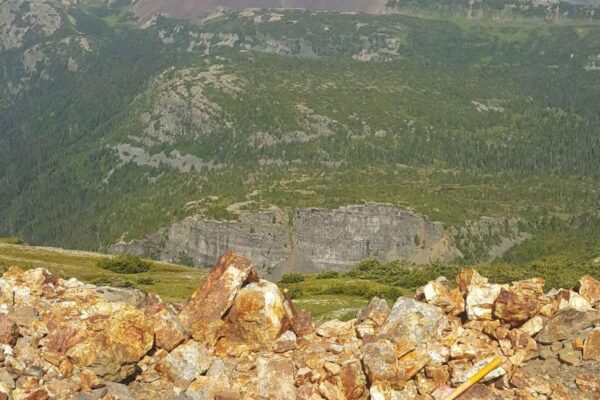
This step is carried out by collecting the sample stones from the favorable places and it will be sent for gold mineralization. If the rocks are uncovered then some geochemical methods like stream sediment and soil sampling will be used to find the gold anomalous areas. Based upon the results of the sampling the target areas will be fixed for the further process.

Three Dimension Sampling:
This sampling method is carried out by using two types of drilling. They are Reverse Circulation (RC) and Diamond Core Drilling. The RC drill is easily movable and the sample rock is obtained in the form of chips but in the diamond core drilling the sample is obtained in the form of solid core.

Estimation of Global Resource:
Based upon the previous step result (i.e.) length, width, depth, etc. a global resource of the gold deposit is estimated.

Pre-feasibility exploration:
Based upon the result of global resource estimation, further process will be taken place by using “Close Spaced Diamond Core Drilling” along with the dip and sampling of ore body to improve the reliability. This also helps to predict whether the deposit is mineral or not.

Feasibility Exploration:
This involves additional extensive sampling on the earth surface and underground by using closed space drilling, bench cutting and bench sampling etc. to extract gold. And the “Sluice Box” will be used to filter the extract gold from placer deposits. Then the filtered particles will be sent for further process.

How the Ancient People Initiate the Mining Techniques

Tuesday, April 20th, 2010

The process of mining the earth and finding the metals, minerals, etc and again making the earth to return back to its original state consists of different steps. Generally, mining techniques can be broadly classified into two types, they are Surface Mining and Underground Mining.

In pre-historic period, when the people had found metals like copper, iron on or close to earth surface, they used to manufacture some tools and weapons.

The ancient known mine is the “Lion Cave” which is in Swaziland. Ancient people used hammers, crude picks, etc. But they found very difficult to find the metals or any other precious stones which was in too deep. So they slowly started to invent new ideas to make the work simple. Since there is no blasting method available in that period, they first used to keep fire on the hard rocks to make it soft then they used water to cool it up and so they had broken those hard rocks easily.

The slaves, prisoners of war and the people who did criminal things had forced to work on the mining areas. And the kids were used to carry the ores from the underground mining area to the outer surface. Then the people who are so weak to work underground had made to separate the rich and poor metals.

In some countries they used “Black Powder” to disclose ore veins and earth to loosen. Then as the development occurs, the people have found a plenty of techniques to find the metals, minerals and other precious stones.

Some of the ancient mining techniques were,

  • Fire setting
  • Hydraulic mining
  • Reverse overshot water-wheels

What is gold mining?

Tuesday, February 17th, 2009

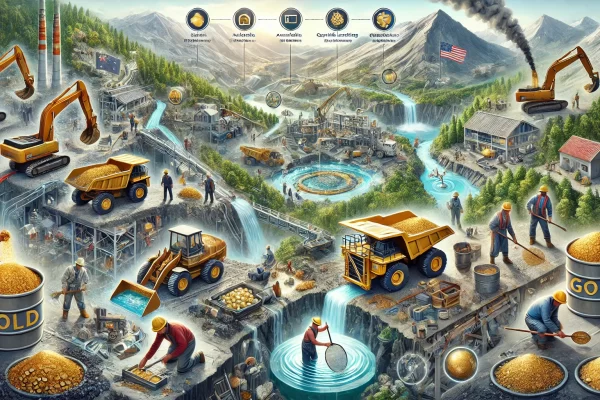
Gold mining consists of the processes and techniques employed in the removal of gold from the ground. Earlier gold was mined using different methods like Panning, cradling, dry blowing, shaft mining, Puddling and dredging. Nowadays open cut mining and underground methods are used for gold mining.

Panning is one of the oldest techniques of separating gold from rock. Gold panning technique was introduced by Isaac Humphrey at Coloma in 1848. Also Mexicans developed panning technique in their country, using a flat dish called a batea. Gold panning was slow even for most skillful miner. In a single day, one miner was able to wash only 50 pans in 12 hour workday and obtain only a small amount of gold dust. This method was the most common method of mining on the goldfields. Rocky material was loosened with pick and shovel. After it had been broken down, this rocky material was taken by wheelbarrow to a creek where it was carefully washed and swished around a shallow metal pan. As the water separated the particles of dirt, rock and pebbles, small deposits of gold sank to the bottom of the pan. This was successful for yielding small nuggets. A persistent prospector could find a considerable amount of gold over time.

Cradle (Rocker): This method was introduced by Isaac Humphrey. Cradling involves a wooden box with a handle on one side and a ridged bottom covered with Hessian cloth. Large pieces of rock were sorted through and discarded if they did not yield any gold. Finer rocks and pebbles were then washed with creek water across the ridges in the bottom of the cradle. This method was more successful then panning in that it meant that greater amounts of gravel and dirt could be examined.

Dry blowing: This method was not very effective. This method was adopted in some parts of Australia like Kalgoorli in Western Australia. In this method two pans were used. Fine, dust like material was poured from a pan held high, into the second pan which was positioned on the ground. As the material was poured down, the wind blew away the dust and fine particles of rock, while the tiny nuggets of gold fell into the pan below. While the method was sound in theory, the winds meant that tiny particles of gold could be blown away with the rest of the dust and dirt.

Shaft mining:
One of the popular methods was shaft mining. To find gold from underground, miners dug a shaft of up to 50 meters deep. Most of the miners were equipped for pick and shovel, so this was considered a long and tiring task. This method was adopted when prospector was confident that there was gold in a particular place. It was very difficult to find gold in older days, because there was no proper mining equipment. Discovering gold was more a matter of luck than good judgment.

Puddling:
This method was used to separate gold from clay. Small amounts of clay were dumped in a large container and were filled with water. As it was stirred with wooden stake, clay would dissolve and gold particles would sink to the bottom. Like other methods, even this method did not yield huge amounts of gold, but they were able to get a reasonable amount of gold.

Dredging:
In this method, a huge bucket would be placed in front of the dredge which would scoop vast amounts of sediment from the river bed. This method would then be carefully sifted and sorted. After the sifting was completed, waste material was returned to river bed.

Open cut mining:
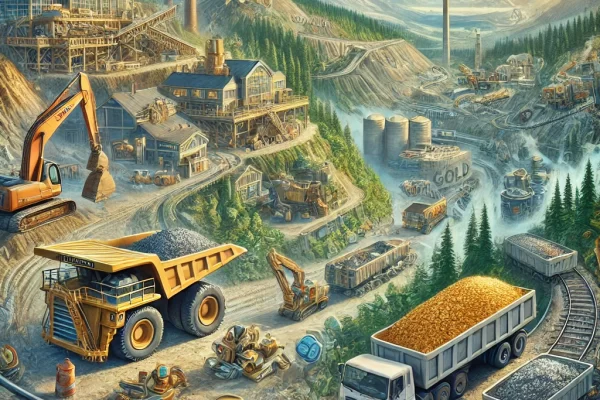
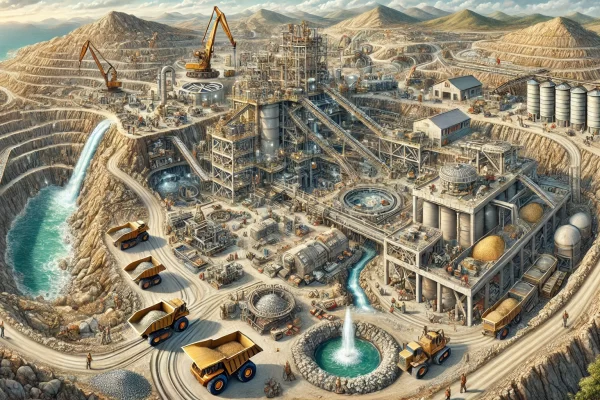
In this method, rocks that are on surface are removed and moved to another place. Over a period of time, the mine is excavated in a series of layers, known as benches. Mining company does take safety measures at regular intervals within the mine to reduce the risk of rock falls. Benches allow trucks and other large vehicles to enter the site and allow drilling and ore sampling at different levels. The rocks that are removed with the help of machines are crushed and sifted through for gold. This method is very profitable because the removed rocks will at least have three to four grams of gold per tonne.
Drills and explosives are used to break the rock. Explosives like ammonium nitrate are used to break the rock. It causes less damage to nearby areas.

Underground Mining:
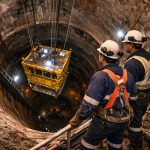
In underground mining, gold is found below the surface. This method is very costly and cause dangers to mine workers. In this method, a shaft is sunk into the ground which would be 1000 meters deep. Horizontal tunnels, known as stopes are dug at various depths and the miners work along these to access the gold.

Vehicles gain access to the various levels of the mine through a spiral tunnel known as a decline. As mineshafts become deeper, the risk of cave-ins or collapses increases. Underground mines operate under strict safety protocols. These include the way the mineshafts are dug and constructed, the methods of support for the walls and ceiling of the mine and the use of special machines to provide adequate ventilation and lighting

Hazards of Cyanide in Mining

Wednesday, January 7th, 2009

The use of cyanide in the mining process of metals such as gold and silver, leads to severe environmental risks. The use of cyanide in gold mining has led to environmental disasters in many countries across the world such as the United States, Canada, China, Guyana, Bolivia, Zimbabwe, Philippines and Ghana. Recently, Community groups and NGOs in Europe and the United States issued a report which exposed the danger of unregulated cyanide compound releases from mines around the world.

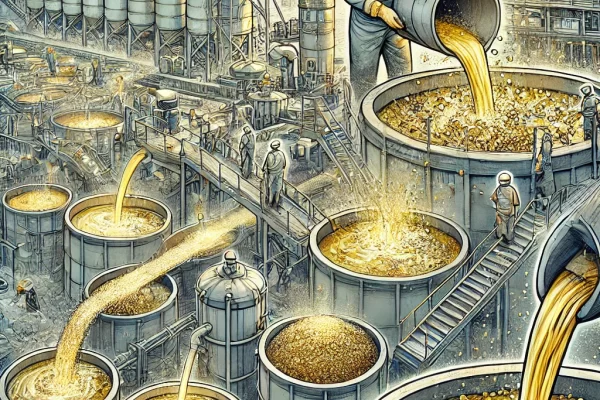
Cyanide is deadly for human beings as well as the environment. The main risks associated with the use of cyanide in mining process are exposure of workers to concentrated hydrogen cyanide gas, leaking of cyanide into the environment and exposure of surrounding communities to cyanide due to accidental releases. During the mining process, the release of cyanide along with other toxic chemicals such as arsenic, lead, cadmium and mercury, leads to harmful effects and permanent damage to some species of animals, plants and human beings. It may also result in deforestation, soil erosion, land slides, and contamination of underground water.

The release of arsenic and other poisonous chemicals during the cyanide leaching process is very dangerous. The cyanide-leach wastes of mining process have the potential to negatively impact municipal sewage and water treatment procedures. It also potentially increases the human intake of several toxic substances. All the cyanide-containing water bodies formed during gold mining milling operations are hazardous to wild animals and migratory birds such waterfowl and bats, if not managed properly. Even accidental leaking of cyanide solutions into rivers and streams will kill fish and other aquatic animals massively. Especially, freshwater fish are the most cyanide-sensitive aquatic organisms.

Workers at gold mining operations can be exposed to cyanide during the heap leaching or tank extraction process. Cyanide is very harmful to human being as it acts as a poison to the human body. Severe breathing difficulties develop when cyanide is inhaled, swallowed or absorbed through the skin. Cyanide blocks the absorption of oxygen by cells, making the victim to suffocate. Exposure to concentrated levels of cyanide can be fatal to the human beings. Exposure to very low concentration of cyanide may cause cancer in people or animals.

We are not certain about the presence and concentration of numerous cyanide compounds in mining wastes. We are also not sure about the presence, persistence, and toxicity of cyanide and related compounds in the environment. But as the effects of cyanide are getting more obvious, the opposition to cyanide leaching in gold mining is also increasing.

The use of cyanide in mining causes an unreasonable risk to the health of people, wildlife, and fish. As the hazards of cyanide in mining process are very much obvious, it is the responsibility of the Government and mining companies to take essential steps. The International Cyanide Management Code provides direction and guidance on how to manage cyanide to ensure protection of workers, the environment and the communities adjacent to mining operations. Mining waste should be regulated in the same manner as other chemical or industrial waste. The public needs enough awareness about mining hazards. The government should ban mining projects that result in environmental hazards in order to prevent ecological disasters. Citizens must also oppose such mining projects. Many organizations in countries such as United States, Canada and Turkey have started associations for banning cyanide leaching in mining.


HOME    ABOUT US    RESOURCES    FAQ's    CONTACT US    SITEMAP    ENGAGEMENT RINGS
Copyright © 2003 YourCompany Inc. All rights reserved.