





Glossary of Mining Terms

A reference table for basic element data, with related information on average crustal abundances, isotopes, water quality standards, common minerals and more.  
                                           

Posts Tagged ‘Metal Mining’

An Overview of Platinum

Tuesday, March 17th, 2009

Platinum:

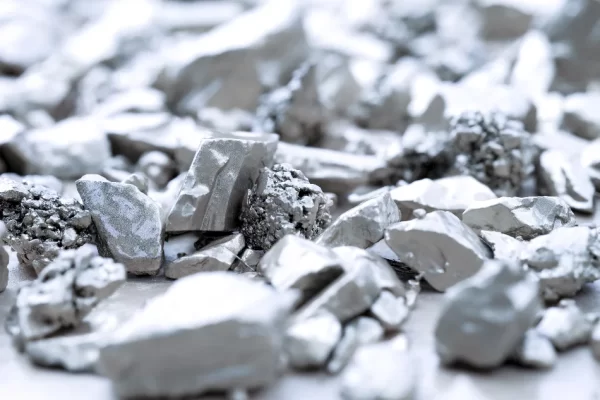
Platinum is a material which is very rare and the cost of gold is double than gold. In igneous rocks platinum is formed and these rocks also have iron and magnesium. Along with other materials like copper and gold, Platinum is also found in thin layers. Using surface and underground Platinum is mined. Due to natural calamities like wind, rain etc…platinum gets washed off and goes to the rivers and streams where through placer mining it’s mined.

In earlier days miners felt that platinum is a junky form of silver and they used to throw it away. Since it’s found in gold mine people named it as ‘white gold’. When copper and gold is mined then platinum is obtained in US. In South Africa, Russia, Columbia, Alaska, and Canada platinum is mined.

Uses of Platinum:

For surgical instruments, chemical equipment, jewelry, and catalytic converters in cars platinum is used. Platinum is metal which can be molded without any trouble and hence it’s used in wire and in items which got to be bent.

Methods of platinum mining:

By narrow reef method first platinum group metals (pgm) is extracted where miners make use of handheld pneumatic drills in order to make holes in the reef which explosives can be loaded. Through blasting when ore is released it’s taken out by making use of scrapers which is attached to wenches and transported to the surface.

The most popular and famous mining methods are New mechanical and hybrid mining. One mining procedure is of drilling either by pneumatic drills/newer specialized drilling equipment and then cleaning the ore from the mine using low-profile vehicles known as LHD (load haul dump).

Vital amounts of platinum are manufactured from the mine sites in far eastern Russia and the Norilsk-Talnakh mine which is situated in the Polar ice cap using both open-pit strip and underground mining procedures. In Zimbabwe platinum was found in the year 1925 in a place by name the Great Dyke which runs approximately north and south for about 550 kilometers through the heart of the country.

Top-rated Platinum Producers:

The underground segment which was lately opened uses deeper level extraction methods. By mechanized ramp and fill procedure 80% of platinum and palladium ore is mined and these are more or less like the LHD method in South Africa.

Platinum, palladium, rhodium, ruthenium, iridium and osmium are the six metallic elements which are called as Platinum Group Metals. At the time of mining procedure these metals are extracted and mining process frequently yields far more nickel/copper than it does for platinum because pgm is rare and also due to its tendency to merge with other metals.

South Africa is the world’s largest producer and there platinum is mined in an area called the Bushveld Igneous Complex. It was estimated that this massive ore deposit has been formed before 2000 years ago, an area of 370 kilometers. And these pgm’s are discovered in three distinct layers known as reefs where the main source of which are the Merensky Reef, first opened in the year 1925 and the Upper Group 2 (UG2) Reef, where mining started in the year 1970s.

Development in Mining Technology

Tuesday, October 21st, 2008

The development of mining technology plays an important role in the mining industry as well as in the environment. The mining industry plays a crucial role in our economy. The mining industry was very conservative in initiating and adopting new technologies in the past due to high capital requirements, environmental limitations and small profit margins. However, the mining industry has made significant progress in productivity, mining technologies used, environmental control, and worker health and safety. The mining industry has also introduced improved clean technology to carry out best mining processes and practices. Such practices have been applied in developing countries which achieved best results. When mining technologies become more widely available, there will be only technology gap between mining industries and countries.

The mining industries continue to play their essential role in sustainable technological development to improve their performance, reduce environmental pollution to all media and enhance the quality of life within their operational work area. The mining industry aims at adopting and implementing innovative technologies through the usage of both mining and environmental technologies to create a better environment quality in mining industry areas, reduce negative impact to human health and environment, reduce water and air pollution, and land degradation.

Most of the recent developments made in mining technologies prove to be cost-effective and environment-friendly technologies. For example, Solvent-extraction/electro-winning (SXEW) is a hydrometallurgical process that differs from the traditional method of producing copper by milling, smelting, and refining. The development of the SXEW process helps in the low-cost production of copper from waste and raw ore dumps of copper minerals excavated from copper mines. SXEW helps United States and few other copper-producing countries very much. EESTECH provides environmentally sustainable technologies that have direct application in the world’s coal mining and energy industries. EESTECH’s Hybrid Coalmine Gas Technology (HCGT) is a recognized Clean Development Mechanism (CDM) that uses waste coal and ventilated coalmine methane as a fuel source to produce cost effective clean coal energy. Clean coal technology offer solutions in the fight against global warming.
The development of new mining technologies helps to reduce production costs, enhance the quality of mined metals and minerals , enhance the quality of commodities using mined minerals, reduce adverse environmental effects, health and safety impacts. Thus the mining technological developments benefits consumers and producers, as well as nation’s economy, national defense, health and social well being.

The most developed and developing countries have already imposed environmental standards for emission, effluent, groundwater contamination, and hazard and toxic management guidelines. But because of weak law enforcement, lack of monitoring capability and skilled human resources, the mining industry do not obey. Hence, the environment standards must be harmonized within the developing countries in order to improve the environmental performance and management of mining industries.

Political and social institutions could exert enormous influence over the mining industry development. Political Institutions including central government, local government and public decision makers must creating international harmonization of environmental standards for better positioning for global competitiveness in mining product. Doing so will improve the corporate image of the mining industries as well as benefit the global consumers.

Workshops and training programs on pollution control and measurement techniques of mining activities, and development of network among mining partnership organizations should be carried out through internship and technical assistance in mining industries.


HOME    ABOUT US    RESOURCES    FAQ's    CONTACT US    SITEMAP    ENGAGEMENT RINGS
Copyright © 2003 YourCompany Inc. All rights reserved.