



Glossary of Mining Terms

A reference table for basic element data, with related information on average crustal abundances, isotopes, water quality standards, common minerals and more.  
                                           

Posts Tagged ‘Mining’

Various types of Mining Equipments

Thursday, January 22nd, 2009

The mining industryis one of the most dangerous working environments. Mining equipments are instruments that are commonly used in extraction of minerals from the earth surface. In the past, ancient times, miners used to excavate minerals and metals by using simple hand held tools. With the introduction of automation and modernization, today’s mining world enjoys the benefit of many types of mining equipments that are used specially for mining purposes. Modern day mining equipment is powered mainly by electricity and hydraulic energy.

Mining equipments are available for various types of mining methods that are performed around the world. There are various types of mining equipments available in the world. Some of them are industrial shredders, drilling equipment, blasting equipment, drill rigs, hammers, mine winders, blasting machine, Mining Locomotive, well drilling machine, industrial crushers, cutting machines, drills, loaders, blasting devices, Track Drill, Rock Drill, etc. Some examples of mining equipment that is used extensively in mining operations are: hard hats, clothing/gear, ventilation fans, rock dusters, tractors, earth movers, water jet pumps, cutting machines, drills, loaders, blasting devices, dozers, trucks, cranes, fork lifts, draglines and many other machineries. A mining light system is important mining equipment used for all mining processes. A mining light system increases the efficiency and the speed of mining operations and guarantees optimum results in mining process. A mining light might consist of a heat sink, LED or laser, magnetic switch or a focusing cone. Gold pans, sluice boxes, metal detectors, digging tools, gold vials, snuffer bottles, etc., are equipments used for gold mining. Various kinds of large mining excavators are available for mining field. The mining excavators using advanced technology help in reaching the international level of performance in mining processes.

There are mining equipments available specifically for Surface mining processes such as open-pit mining, strip or area mining, quarrying, contour mining, mountaintop removal, and placer mining. For example, some of the Open Cast Mining Equipments are Rock Drills, Drifter, Paving Breaker, DTH Hammer, Wagon Drill, Slim Drill LD-4, Pneumatic Crawler Drill, TCT Drill Steel Grinder, and Cross Bit Grinder. There are excellent mining equipments available for Sub-surface mining processes such as shaft mining, drift mining, borehole mining, slope mining, and hard rock mining. Similarly, there are special mining equipments for deep underground mining processes such as Longwall mining, Continuous mining, Blast mining, Shortwall mining and Retreat mining. For example, some of the underground Mining Equipments are Junior Simba, Mucking Machine, Slurry Pump, Exhaust Fan, Air Mover, Cement Injection Pump, Pneumatic Power Pack, Turbo Light, Spare parts for Atlas Copco Drifter BBC-120F, Simba Junior, BMS-46 Feed Motor, BSP 10 Pneumatic Rod Catcher, Atlas Copco Cavo 310 Loader, Pneumatic Raise Climber, Eimco Loader & Hopper.

The use of right mining equipment is very essential for increased productivity. For example, the use of large mining equipment in surface mining maximizes the recovery through the excavation of one or more coal seam deposits in the large area surface mines.

Many features, restrictions and criteria need to be considered while choosing the mining equipments for a mining process. The two most important factors for choosing any type of mining equipment are its strength and durability. Cost is also an important consideration while selecting mining equipments.

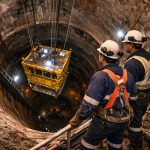
Mining is a very dangerous process. If a wrong piece of equipment or tool is used for a specific mining purpose, it might lead to disaster. Therefore it is important that everybody involved in the mining operation must know exactly how to use their mining tools properly. Each worker should be properly and thoroughly trained to use every part of mining equipment they will be using. Also the workers should be educated about the safety measures in using the mining equipments.

Hazards of Cyanide in Mining

Wednesday, January 7th, 2009

The use of cyanide in the mining process of metals such as gold and silver, leads to severe environmental risks. The use of cyanide in gold mining has led to environmental disasters in many countries across the world such as the United States, Canada, China, Guyana, Bolivia, Zimbabwe, Philippines and Ghana. Recently, Community groups and NGOs in Europe and the United States issued a report which exposed the danger of unregulated cyanide compound releases from mines around the world.

Cyanide is deadly for human beings as well as the environment. The main risks associated with the use of cyanide in mining process are exposure of workers to concentrated hydrogen cyanide gas, leaking of cyanide into the environment and exposure of surrounding communities to cyanide due to accidental releases. During the mining process, the release of cyanide along with other toxic chemicals such as arsenic, lead, cadmium and mercury, leads to harmful effects and permanent damage to some species of animals, plants and human beings. It may also result in deforestation, soil erosion, land slides, and contamination of underground water.

The release of arsenic and other poisonous chemicals during the cyanide leaching process is very dangerous. The cyanide-leach wastes of mining process have the potential to negatively impact municipal sewage and water treatment procedures. It also potentially increases the human intake of several toxic substances. All the cyanide-containing water bodies formed during gold mining milling operations are hazardous to wild animals and migratory birds such waterfowl and bats, if not managed properly. Even accidental leaking of cyanide solutions into rivers and streams will kill fish and other aquatic animals massively. Especially, freshwater fish are the most cyanide-sensitive aquatic organisms.

Workers at gold mining operations can be exposed to cyanide during the heap leaching or tank extraction process. Cyanide is very harmful to human being as it acts as a poison to the human body. Severe breathing difficulties develop when cyanide is inhaled, swallowed or absorbed through the skin. Cyanide blocks the absorption of oxygen by cells, making the victim to suffocate. Exposure to concentrated levels of cyanide can be fatal to the human beings. Exposure to very low concentration of cyanide may cause cancer in people or animals.

We are not certain about the presence and concentration of numerous cyanide compounds in mining wastes. We are also not sure about the presence, persistence, and toxicity of cyanide and related compounds in the environment. But as the effects of cyanide are getting more obvious, the opposition to cyanide leaching in gold mining is also increasing.

The use of cyanide in mining causes an unreasonable risk to the health of people, wildlife, and fish. As the hazards of cyanide in mining process are very much obvious, it is the responsibility of the Government and mining companies to take essential steps. The International Cyanide Management Code provides direction and guidance on how to manage cyanide to ensure protection of workers, the environment and the communities adjacent to mining operations. Mining waste should be regulated in the same manner as other chemical or industrial waste. The public needs enough awareness about mining hazards. The government should ban mining projects that result in environmental hazards in order to prevent ecological disasters. Citizens must also oppose such mining projects. Many organizations in countries such as United States, Canada and Turkey have started associations for banning cyanide leaching in mining.

Problems of Uranium Mining

Thursday, December 11th, 2008

Tailings squander
Even the utmost grade deposits have less than 1% uranium. So vast amounts of ore have to be processed to obtain useful quantities of the uranium. The leftover ‘waste’ rock is known tailings. In the course of processing it is crushed to a well powder, which is nearly as radioactive as the uranium itself. It is perilous for more than 250,000 years, which might as well be eternally. These tailings need to be secluded from the environment to avoid a cancer epidemic, and there are previously more than 50 million tonnes of uranium tailings on Australian soil.

Radon Gas
As uranium emanates radiation; it transforms itself into a novel element, which in turn emanates radiation and decays, and so on through 14 steps until it ultimately - after hundreds of thousands of years - becomes a stable type of non-radioactive lead. One of the elements along the way is radon, a radioactive gas which can travel for hundreds of kilometres prior to decaying. Mine workers and others who breathe in this gas risk mounting lung cancer and other kinds of lung disease

Environmental Pollution
Uranium mining pollutes the air, water and earth with radioactive chemicals and heavy metals which can never be well cleaned up. In addition to the radiation hazard, mining is also related with poisonous process chemicals, heavy metals and the use of vast quantities of water. In the short term, uranium mine sites ruin the ecology of the local region; in the long term, they pose a risk to a much wider area.

Health risks
The health risks of uranium mining are by now fairly well known, although still belligerently disputed by the mining industry. Collectively, uranium miners suffer the maximum radiation doses of all workers in the nuclear fuel chain. The major problems are inhalation of dust and radon gas, which leave alpha radiation emitters lodged in the body where they can do the majority harm. As the pollution from the mines spread away from the minesite, local people are also out in the open to contamination. While uranium mining is most usually allied with cancer, low level radiation is also mixed up in birth fault, high infant mortality and chronic lung, eye, skin and reproductive illnesses.

Nuclear Waste
There is a vast amount of high level nuclear waste still being spewed out by reactors round the world and there is nowhere safe to put it. Pangea Resources actually has a plan to bring many of this waste into Australia. Nuclear power stations create this waste as fraction of normal operations; but there are also risks of reactor accidents; the explosion at Chernobyl in 1986 killed a lot of people, spread nuclear pollution right around the planet and forced the enduring evacuation of the surrounding area.

Nuclear Weapons
While the mining companies do not like to confess it, nuclear power is a military technology designed to make plutonium for nuclear weapons. Thousands of these weapons are still on hairtrigger alert ten further than ten years after the Cold War, and they are spreading gradually to new countries.

Development in Mining Technology

Tuesday, October 21st, 2008

The development of mining technology plays an important role in the mining industry as well as in the environment. The mining industry plays a crucial role in our economy. The mining industry was very conservative in initiating and adopting new technologies in the past due to high capital requirements, environmental limitations and small profit margins. However, the mining industry has made significant progress in productivity, mining technologies used, environmental control, and worker health and safety. The mining industry has also introduced improved clean technology to carry out best mining processes and practices. Such practices have been applied in developing countries which achieved best results. When mining technologies become more widely available, there will be only technology gap between mining industries and countries.

The mining industries continue to play their essential role in sustainable technological development to improve their performance, reduce environmental pollution to all media and enhance the quality of life within their operational work area. The mining industry aims at adopting and implementing innovative technologies through the usage of both mining and environmental technologies to create a better environment quality in mining industry areas, reduce negative impact to human health and environment, reduce water and air pollution, and land degradation.

Most of the recent developments made in mining technologies prove to be cost-effective and environment-friendly technologies. For example, Solvent-extraction/electro-winning (SXEW) is a hydrometallurgical process that differs from the traditional method of producing copper by milling, smelting, and refining. The development of the SXEW process helps in the low-cost production of copper from waste and raw ore dumps of copper minerals excavated from copper mines. SXEW helps United States and few other copper-producing countries very much. EESTECH provides environmentally sustainable technologies that have direct application in the world’s coal mining and energy industries. EESTECH’s Hybrid Coalmine Gas Technology (HCGT) is a recognized Clean Development Mechanism (CDM) that uses waste coal and ventilated coalmine methane as a fuel source to produce cost effective clean coal energy. Clean coal technology offer solutions in the fight against global warming.
The development of new mining technologies helps to reduce production costs, enhance the quality of mined metals and minerals , enhance the quality of commodities using mined minerals, reduce adverse environmental effects, health and safety impacts. Thus the mining technological developments benefits consumers and producers, as well as nation’s economy, national defense, health and social well being.

The most developed and developing countries have already imposed environmental standards for emission, effluent, groundwater contamination, and hazard and toxic management guidelines. But because of weak law enforcement, lack of monitoring capability and skilled human resources, the mining industry do not obey. Hence, the environment standards must be harmonized within the developing countries in order to improve the environmental performance and management of mining industries.

Political and social institutions could exert enormous influence over the mining industry development. Political Institutions including central government, local government and public decision makers must creating international harmonization of environmental standards for better positioning for global competitiveness in mining product. Doing so will improve the corporate image of the mining industries as well as benefit the global consumers.

Workshops and training programs on pollution control and measurement techniques of mining activities, and development of network among mining partnership organizations should be carried out through internship and technical assistance in mining industries.


HOME    ABOUT US    RESOURCES    FAQ's    CONTACT US    SITEMAP    ENGAGEMENT RINGS
Copyright © 2003 YourCompany Inc. All rights reserved.