Glossary of Mining Terms

A reference table for basic element data, with related information on average crustal abundances, isotopes, water quality standards, common minerals and more.  
                                           

Metal ore mining

July 2nd, 2009

The metal ore mining industry segment covers the extraction of metal ores, primarily gold, silver, iron, copper, lead, and zinc. These naturally occurring minerals have a variety of industrial purposes: gold and silver are primarily used in jewelry and high-end electronics, iron is used to produce steel, copper is the main component of electrical wiring, lead is used in batteries, and zinc is used to coat iron and steel to reduce corrosion and as an alloy in the making of bronze and brass.

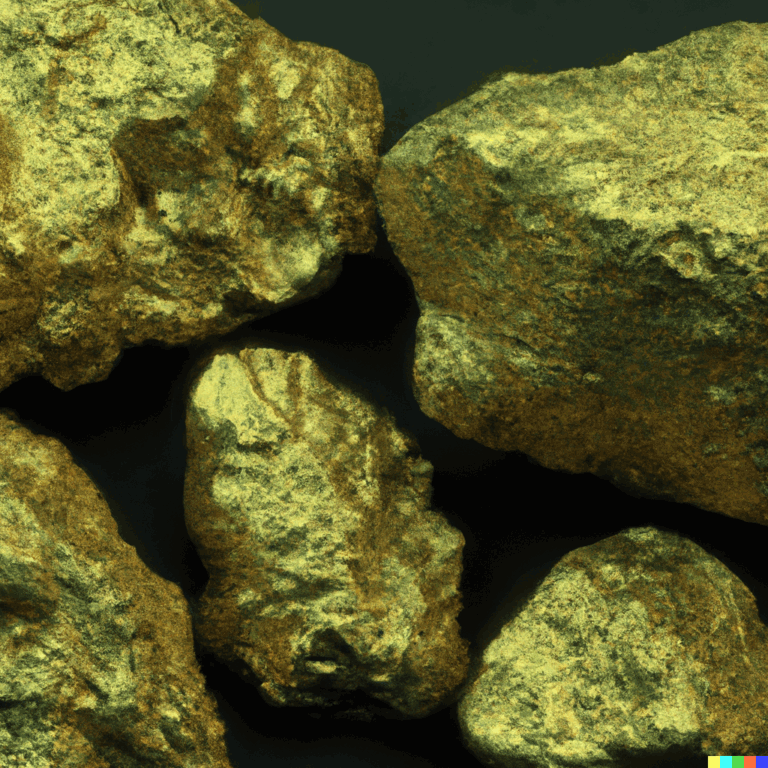
Most metals do not exist in concentrated form but rather in small traces in rock called “ore”. Indistinguishable from regular rocks to the untrained eye, some ores are currently mined that contain only a fraction of a percent of metal. As a result, a massive amount of rock must be extracted from the ground in order to obtain a useable amount of metal. As a result of this, and because metal ores are less common than coal, metal mines can be much larger than coal mines and operate in more extreme environments—while coal mines are rarely more than a few hundred feet underground, gold mines can be over a mile below the surface.

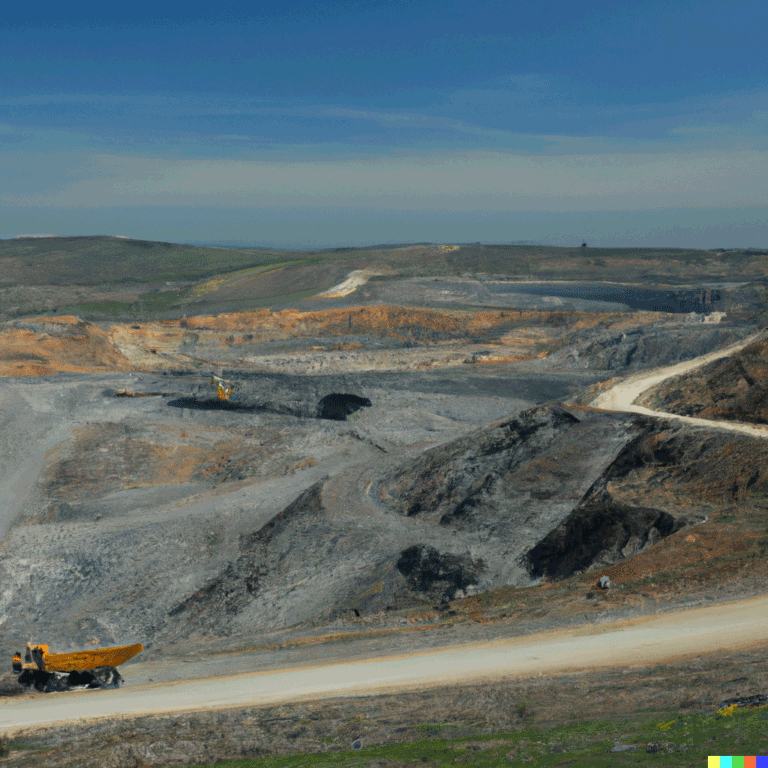
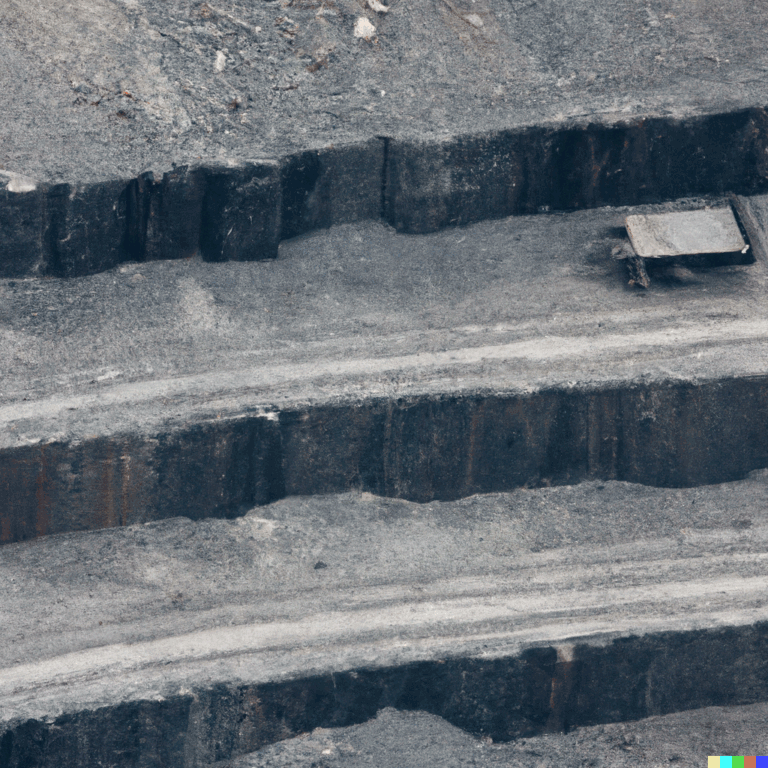
Like coal mines, metal ore mines are found in both surface and underground varieties, depending on where the ore deposit is located. In addition to strip mining, surface ore mines also use the open-pit mining technique. These mines are huge holes in the ground that are mined by blasting rock from the sides and bottom with explosives, carrying out the broken up material in trucks, and then repeating the process. Open pit mines can grow to be hundreds of feet deep and several miles wide. Underground mining of ore is less common, typically only occurring when rich veins of ore are discovered or mineral prices are high enough to justify the added expense.

A significant amount of processing is needed to convert ore into usable metal. The mining industry includes initial mineral processing and preparation activities that are located together with mines as part of the extraction process. Further processing is classified under the primary metal manufacturing industry.

Oil and gas extraction mining

June 15th, 2009

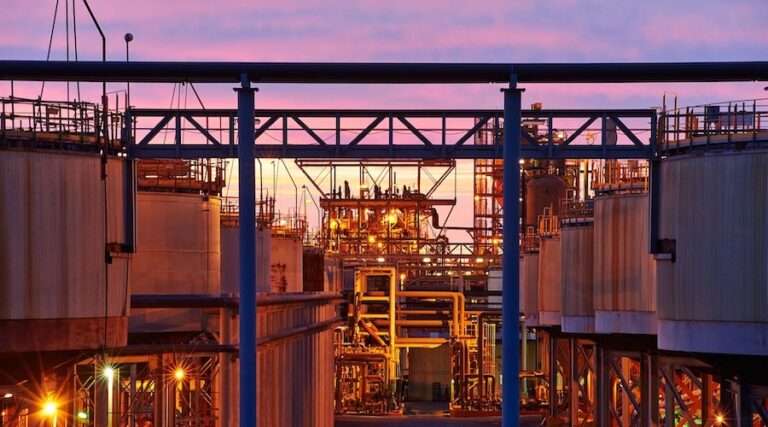
The oil and gas extraction segment produces the petroleum and natural gas that heat homes, fuel cars, and power factories. Petroleum products are also the raw materials for plastics, chemicals, medicines, fertilizers, and synthetic fibers. Petroleum, commonly called crude oil or just oil, is a liquid formed under ground from the decay of plants and animals over millions of years through extreme heat and pressure. Occasionally, this decaying material becomes trapped under a layer of impermeable rock that prevents it from dispersing and creates a pocket of oil. Similar processes also produce natural gas, which can be found mixed with oil or in separate deposits. Finding and extracting the oil and gas in these pockets is the primary function of this industry segment.

Using a variety of methods, on land and at sea, small crews of specialized workers search for geologic formations that are likely to contain pockets of oil or gas. Sophisticated equipment and advances in computer technology have increased the productivity of exploration. Maps of potential deposits now are made using remote-sensing satellites. Seismic prospecting—a technique based on measuring the time it takes sound waves to travel through underground formations and return to the surface—has revolutionized oil and gas exploration. Computers and advanced software analyze seismic data to provide three-dimensional models of subsurface rock formations. Another method of searching for oil and gas is based on collecting and analyzing core samples of rock, clay, and sand in the earth’s layers.

After scientific exploration studies indicate the possible presence of oil, a well must be drilled to prove oil is there. An oil company selects a well site and installs a derrick—a tower-like steel structure—to support the drilling equipment. A hole is drilled deep into the earth until oil or gas is found, or the company abandons the effort. Similar techniques are employed in offshore drilling, except that the drilling equipment is part of a steel platform that either sits on the ocean floor, or floats on the surface and is anchored to the ocean floor. Advancements in directional or horizontal drilling techniques, which allow increased access to potential reserves, have had a significant impact on drilling capabilities. Drilling begins vertically, but the drill bit can be turned so that drilling can continue at an angle of up to 90 degrees. This technique extends the drill’s reach, enabling it to reach separate pockets of oil or gas. Because constructing new platforms is costly, this technique commonly is employed by offshore drilling operations.

Once the drilling reaches the oil or gas, extraction can begin as natural pressure forces the oil or gas up through the drill hole to the wellhead, where it enters separation and storage tanks. If natural pressure is not great enough to force the oil to the surface, pumps may be used. In some cases, water, steam, or gas may be injected into the oil deposit to improve recovery. The recovered oil is transported to refineries by pipeline, ship, barge, truck, or railroad. Natural gas usually is transported to processing plants by pipeline. While oil refineries may be many thousands of miles away from the producing fields, gas processing plants typically are near the fields, so that impurities—water, sulfur, and natural gas liquids—can be removed before the gas is piped to customers. The oil refining industry is considered a separate industry, and its activities are not covered here, even though many oil companies both extract and refine oil.

Coal mining industry

May 18th, 2009

The coal mining industry segment produces coal, a fossil fuel that is used primarily for electric power generation and in the production of steel. Like oil, coal is formed over millions of years from plant and animal matter, but unlike oil, coal is a solid, and therefore miners must go into the earth to recover it. Many coal seams are located close to the surface, however, which makes the extraction of this resource easier.

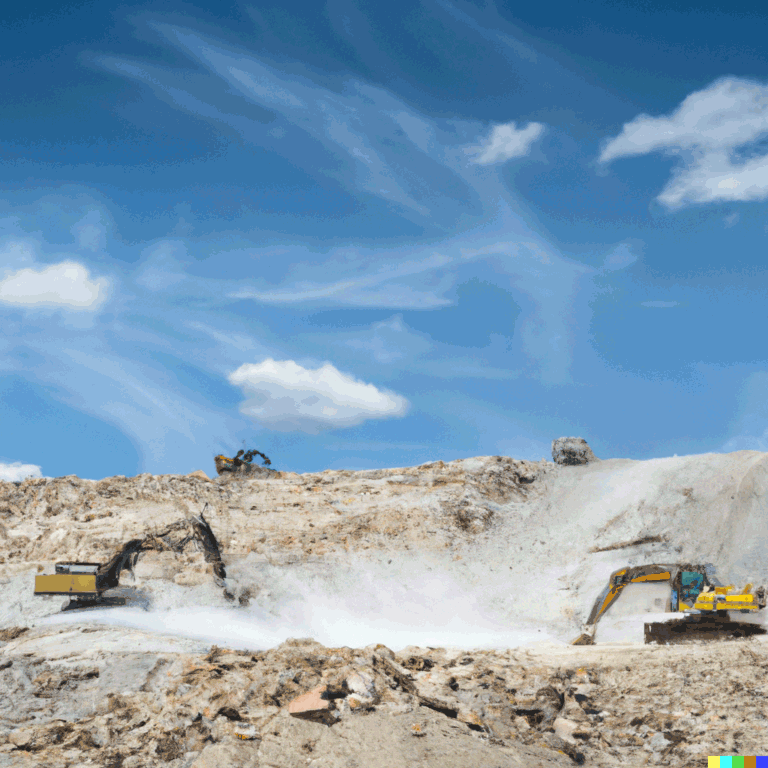
Surface mining of coal typically uses the method known as strip mining, which is usually more cost-effective than underground mining and requires fewer workers to produce the same quantity of coal. In strip mining, workers use huge earthmoving equipment, such as power shovels or draglines, to scoop off the layers of soil and rock covering the coal seam. Once the coal is exposed, it is broken up by using explosives, and then smaller shovels lift it from the ground and load it into trucks. Mining companies are required by Federal, State, and local laws to restore the mined land after surface mining is completed; as a result, the overburden and topsoil are stored after removal so that they can be replaced and native vegetation replanted.

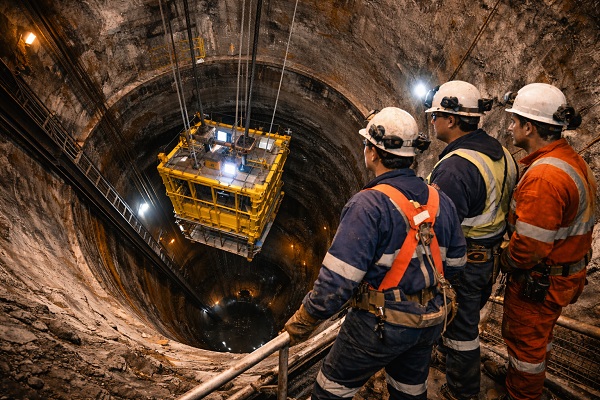
Underground mining is used when the coal deposit lies deep below the surface of the earth. When developing an underground mine, miners first must dig tunnels deep into the earth near the place where the coal is located. Depending on where the coal seam is in relation to the surface, tunnels may be vertical, horizontal, or sloping. Entries are constructed so that miners can get themselves and their equipment to the ore and carry it out, while allowing fresh air to enter the mine. Once dug to the proper depth, a mine’s tunnels interconnect with a network of passageways going in many directions. Using the room-and-pillar method, miners remove sections of the coal as they work the coal seam from the tunnel entrance to the edge of the mine property, leaving columns of coal in place to help support the ceiling together with long steel bolts. This process is then reversed, and the remainder of the ore is extracted, as the miners work their way back out. In the case of longwall mining of coal, self-advancing roof supports, made of hydraulic jacks and metal plates, cover the area being mined. As coal is removed, the entire apparatus advances, allowing the ceiling in the mined area to cave in as the miners work back towards the tunnel entrance. Underground mining does not require as extensive a reclamation process as surface mining; however, mine operators and environmental engineers still must ensure that ground water remains uncontaminated and that abandoned mines do not collapse.

How is opal mined?

April 29th, 2009

Opal:

Opal has been a mystery for centuries. No two opals look alike. The word ‘opal’ was derived from a Greek word opallos, meaning “to see changes of color”. Opal is derived as a precious gemstone which is formed from non-crystalline silica gel. It consists of 6 to 10 per cent water and small silica spheres are arranged in a regular pattern. It generally measures 5.5 to 6.5 on MOH’s hardness scale with diamonds measuring 9 to 10 and pearls 4 to 5. It is a birthstone for October.

Opal dates back to 1849 where it was found at a cattle station named Tarrawilla, near Angaston some 80 km outside Adelaide in Australia. Nearly 95% of the opal is found in Australia. A small number is found in other countries like Mexico, Brazil and USA. There are three major opal mining regions in Australia that produce different types of opal.

White opal also known as “milk” opal is found in and around the towns of Coober Pedy, Mintabie and Andamooka in South Australia. The most famous opal is the black opal which is found in Lightning Ridge in the state of New South Wales. Boulder Opal is found in Central Queensland, Quilpie, Winton and Opalton. Other opals include Light Opal, Doublet, Triplet, Common, Synthetic and Imitation.

Most of the opal deposits are found in New South Wales, South Australia and Queensland. At present, mining of opal is done in the following areas and each produces solid Opal with specific characteristics and color patterns.

Lightning Ridge, NSW, is famous for glorious black opal. This town is situated 770 kilometers northwest of Sydney. Black opal was first discovered at Lighting Ridge in the late 1880’s.

White Cliffs is Australia’s oldest commercial opal field. This is situated around 295 kilometres northeast of Broken Hill. Opal was first mined at White Cliffs about 1889. For nearly 30 years, White Cliff opal fields produced opal for the world market.

The real development of Queensland’s vast opal deposits began in 1873 with the discovery of fine quality opal north of Thargomindah. Opal mines are concentrated in certain regions like Yowah, Quilpie, Eromanga and Jundah.

Coober Pedy is famous for White or milky opals. At present, opal fields encompass an area of approximately 45 kilometres. Andamooka is found southwest of Coober Pedy in harsh desert country. Andamooka is one of Australia’s most famous opal fields, having produced some of the most beautiful pieces of opal. The opal fields in and around Andamooka produce top gem, crystal, light opal and some dark opal.

Opal usually occurs in both sedimentary and volcanic rocks. There are various methods of opal mining.

Methods of opal mining

Sink a shaft:
The simplest form of opal mining is by shaft sinking with a pick and shovel. A shaft is sunk straight down until some promising “opal dirt” is discovered. Length of the shaft could be as short as three metres or as long as 20 metres. A handpick or screwdriver is used to extract any opal found, due to the frailty of the stone.

Open cut mining:
Open cut method is done by the use of heavy machinery to remove large amounts of opal dirt from closer to the surface for inspection. This method is more expensive and is mostly used to search for boulder opal in Central Queensland.

Noodling:
Many locals search through heaps of discarded mullock for pieces of precious opal. An abandoned open-cut mine is another good place for a noodler, using a rake and sieve for tools. Some have taken to large scale machine noodling by allowing large amounts of opal dirt travel on a conveyer belt under ultra-violet light, which detects the precious opal.

Puddling and Rumbling:
A Puddler is a large mesh-lined drum attached to a motor. This device rotates and turns the clay into sludge as water is pumped into the drum. The sludge escapes through the mesh. A related technique is dry rumbling.

An Overview of Platinum

March 17th, 2009

Platinum:

Platinum is a material which is very rare and the cost of gold is double than gold. In igneous rocks platinum is formed and these rocks also have iron and magnesium. Along with other materials like copper and gold, Platinum is also found in thin layers. Using surface and underground Platinum is mined. Due to natural calamities like wind, rain etc…platinum gets washed off and goes to the rivers and streams where through placer mining it’s mined.

In earlier days miners felt that platinum is a junky form of silver and they used to throw it away. Since it’s found in gold mine people named it as ‘white gold’. When copper and gold is mined then platinum is obtained in US. In South Africa, Russia, Columbia, Alaska, and Canada platinum is mined.

Uses of Platinum:

For surgical instruments, chemical equipment, jewelry, and catalytic converters in cars platinum is used. Platinum is metal which can be molded without any trouble and hence it’s used in wire and in items which got to be bent.

Methods of platinum mining:

By narrow reef method first platinum group metals (pgm) is extracted where miners make use of handheld pneumatic drills in order to make holes in the reef which explosives can be loaded. Through blasting when ore is released it’s taken out by making use of scrapers which is attached to wenches and transported to the surface.

The most popular and famous mining methods are New mechanical and hybrid mining. One mining procedure is of drilling either by pneumatic drills/newer specialized drilling equipment and then cleaning the ore from the mine using low-profile vehicles known as LHD (load haul dump).

Vital amounts of platinum are manufactured from the mine sites in far eastern Russia and the Norilsk-Talnakh mine which is situated in the Polar ice cap using both open-pit strip and underground mining procedures. In Zimbabwe platinum was found in the year 1925 in a place by name the Great Dyke which runs approximately north and south for about 550 kilometers through the heart of the country.

Top-rated Platinum Producers:

The underground segment which was lately opened uses deeper level extraction methods. By mechanized ramp and fill procedure 80% of platinum and palladium ore is mined and these are more or less like the LHD method in South Africa.

Platinum, palladium, rhodium, ruthenium, iridium and osmium are the six metallic elements which are called as Platinum Group Metals. At the time of mining procedure these metals are extracted and mining process frequently yields far more nickel/copper than it does for platinum because pgm is rare and also due to its tendency to merge with other metals.

South Africa is the world’s largest producer and there platinum is mined in an area called the Bushveld Igneous Complex. It was estimated that this massive ore deposit has been formed before 2000 years ago, an area of 370 kilometers. And these pgm’s are discovered in three distinct layers known as reefs where the main source of which are the Merensky Reef, first opened in the year 1925 and the Upper Group 2 (UG2) Reef, where mining started in the year 1970s.

What is gold mining?

February 17th, 2009

Gold mining consists of the processes and techniques employed in the removal of gold from the ground. Earlier gold was mined using different methods like Panning, cradling, dry blowing, shaft mining, Puddling and dredging. Nowadays open cut mining and underground methods are used for gold mining.

Panning is one of the oldest techniques of separating gold from rock. Gold panning technique was introduced by Isaac Humphrey at Coloma in 1848. Also Mexicans developed panning technique in their country, using a flat dish called a batea. Gold panning was slow even for most skillful miner. In a single day, one miner was able to wash only 50 pans in 12 hour workday and obtain only a small amount of gold dust. This method was the most common method of mining on the goldfields. Rocky material was loosened with pick and shovel. After it had been broken down, this rocky material was taken by wheelbarrow to a creek where it was carefully washed and swished around a shallow metal pan. As the water separated the particles of dirt, rock and pebbles, small deposits of gold sank to the bottom of the pan. This was successful for yielding small nuggets. A persistent prospector could find a considerable amount of gold over time.

Cradle (Rocker): This method was introduced by Isaac Humphrey. Cradling involves a wooden box with a handle on one side and a ridged bottom covered with Hessian cloth. Large pieces of rock were sorted through and discarded if they did not yield any gold. Finer rocks and pebbles were then washed with creek water across the ridges in the bottom of the cradle. This method was more successful then panning in that it meant that greater amounts of gravel and dirt could be examined.

Dry blowing: This method was not very effective. This method was adopted in some parts of Australia like Kalgoorli in Western Australia. In this method two pans were used. Fine, dust like material was poured from a pan held high, into the second pan which was positioned on the ground. As the material was poured down, the wind blew away the dust and fine particles of rock, while the tiny nuggets of gold fell into the pan below. While the method was sound in theory, the winds meant that tiny particles of gold could be blown away with the rest of the dust and dirt.

Shaft mining:
One of the popular methods was shaft mining. To find gold from underground, miners dug a shaft of up to 50 meters deep. Most of the miners were equipped for pick and shovel, so this was considered a long and tiring task. This method was adopted when prospector was confident that there was gold in a particular place. It was very difficult to find gold in older days, because there was no proper mining equipment. Discovering gold was more a matter of luck than good judgment.

Puddling:
This method was used to separate gold from clay. Small amounts of clay were dumped in a large container and were filled with water. As it was stirred with wooden stake, clay would dissolve and gold particles would sink to the bottom. Like other methods, even this method did not yield huge amounts of gold, but they were able to get a reasonable amount of gold.

Dredging:
In this method, a huge bucket would be placed in front of the dredge which would scoop vast amounts of sediment from the river bed. This method would then be carefully sifted and sorted. After the sifting was completed, waste material was returned to river bed.

Open cut mining:
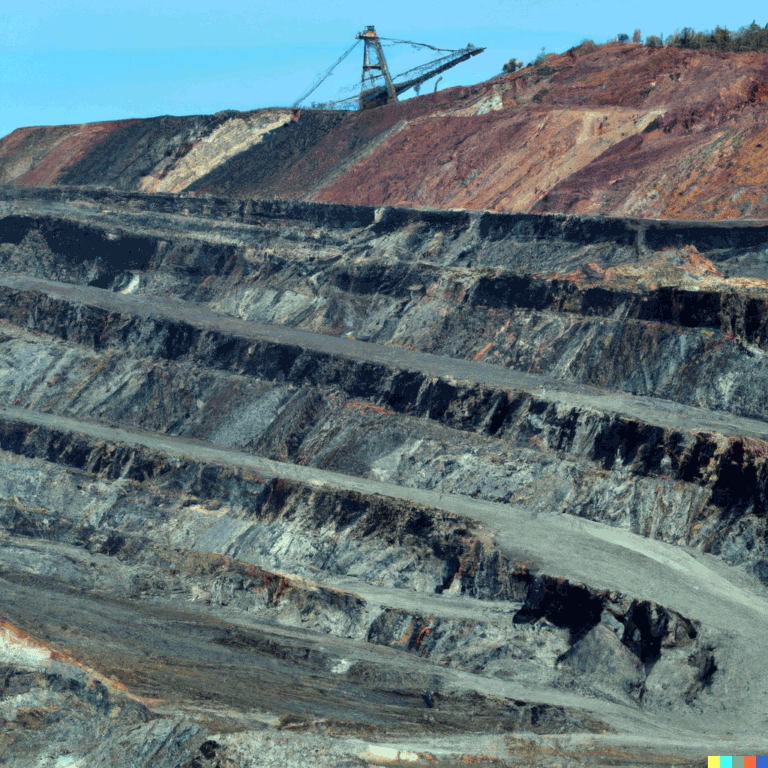
In this method, rocks that are on surface are removed and moved to another place. Over a period of time, the mine is excavated in a series of layers, known as benches. Mining company does take safety measures at regular intervals within the mine to reduce the risk of rock falls. Benches allow trucks and other large vehicles to enter the site and allow drilling and ore sampling at different levels. The rocks that are removed with the help of machines are crushed and sifted through for gold. This method is very profitable because the removed rocks will at least have three to four grams of gold per tonne.
Drills and explosives are used to break the rock. Explosives like ammonium nitrate are used to break the rock. It causes less damage to nearby areas.

Underground Mining:
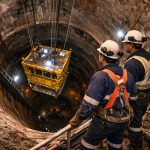
In underground mining, gold is found below the surface. This method is very costly and cause dangers to mine workers. In this method, a shaft is sunk into the ground which would be 1000 meters deep. Horizontal tunnels, known as stopes are dug at various depths and the miners work along these to access the gold.

Vehicles gain access to the various levels of the mine through a spiral tunnel known as a decline. As mineshafts become deeper, the risk of cave-ins or collapses increases. Underground mines operate under strict safety protocols. These include the way the mineshafts are dug and constructed, the methods of support for the walls and ceiling of the mine and the use of special machines to provide adequate ventilation and lighting

Various types of Mining Equipments

January 22nd, 2009

The mining industryis one of the most dangerous working environments. Mining equipments are instruments that are commonly used in extraction of minerals from the earth surface. In the past, ancient times, miners used to excavate minerals and metals by using simple hand held tools. With the introduction of automation and modernization, today’s mining world enjoys the benefit of many types of mining equipments that are used specially for mining purposes. Modern day mining equipment is powered mainly by electricity and hydraulic energy.

Mining equipments are available for various types of mining methods that are performed around the world. There are various types of mining equipments available in the world. Some of them are industrial shredders, drilling equipment, blasting equipment, drill rigs, hammers, mine winders, blasting machine, Mining Locomotive, well drilling machine, industrial crushers, cutting machines, drills, loaders, blasting devices, Track Drill, Rock Drill, etc. Some examples of mining equipment that is used extensively in mining operations are: hard hats, clothing/gear, ventilation fans, rock dusters, tractors, earth movers, water jet pumps, cutting machines, drills, loaders, blasting devices, dozers, trucks, cranes, fork lifts, draglines and many other machineries. A mining light system is important mining equipment used for all mining processes. A mining light system increases the efficiency and the speed of mining operations and guarantees optimum results in mining process. A mining light might consist of a heat sink, LED or laser, magnetic switch or a focusing cone. Gold pans, sluice boxes, metal detectors, digging tools, gold vials, snuffer bottles, etc., are equipments used for gold mining. Various kinds of large mining excavators are available for mining field. The mining excavators using advanced technology help in reaching the international level of performance in mining processes.

There are mining equipments available specifically for Surface mining processes such as open-pit mining, strip or area mining, quarrying, contour mining, mountaintop removal, and placer mining. For example, some of the Open Cast Mining Equipments are Rock Drills, Drifter, Paving Breaker, DTH Hammer, Wagon Drill, Slim Drill LD-4, Pneumatic Crawler Drill, TCT Drill Steel Grinder, and Cross Bit Grinder. There are excellent mining equipments available for Sub-surface mining processes such as shaft mining, drift mining, borehole mining, slope mining, and hard rock mining. Similarly, there are special mining equipments for deep underground mining processes such as Longwall mining, Continuous mining, Blast mining, Shortwall mining and Retreat mining. For example, some of the underground Mining Equipments are Junior Simba, Mucking Machine, Slurry Pump, Exhaust Fan, Air Mover, Cement Injection Pump, Pneumatic Power Pack, Turbo Light, Spare parts for Atlas Copco Drifter BBC-120F, Simba Junior, BMS-46 Feed Motor, BSP 10 Pneumatic Rod Catcher, Atlas Copco Cavo 310 Loader, Pneumatic Raise Climber, Eimco Loader & Hopper.

The use of right mining equipment is very essential for increased productivity. For example, the use of large mining equipment in surface mining maximizes the recovery through the excavation of one or more coal seam deposits in the large area surface mines.

Many features, restrictions and criteria need to be considered while choosing the mining equipments for a mining process. The two most important factors for choosing any type of mining equipment are its strength and durability. Cost is also an important consideration while selecting mining equipments.

Mining is a very dangerous process. If a wrong piece of equipment or tool is used for a specific mining purpose, it might lead to disaster. Therefore it is important that everybody involved in the mining operation must know exactly how to use their mining tools properly. Each worker should be properly and thoroughly trained to use every part of mining equipment they will be using. Also the workers should be educated about the safety measures in using the mining equipments.

Hazards of Cyanide in Mining

January 7th, 2009

The use of cyanide in the mining process of metals such as gold and silver, leads to severe environmental risks. The use of cyanide in gold mining has led to environmental disasters in many countries across the world such as the United States, Canada, China, Guyana, Bolivia, Zimbabwe, Philippines and Ghana. Recently, Community groups and NGOs in Europe and the United States issued a report which exposed the danger of unregulated cyanide compound releases from mines around the world.

Cyanide is deadly for human beings as well as the environment. The main risks associated with the use of cyanide in mining process are exposure of workers to concentrated hydrogen cyanide gas, leaking of cyanide into the environment and exposure of surrounding communities to cyanide due to accidental releases. During the mining process, the release of cyanide along with other toxic chemicals such as arsenic, lead, cadmium and mercury, leads to harmful effects and permanent damage to some species of animals, plants and human beings. It may also result in deforestation, soil erosion, land slides, and contamination of underground water.

The release of arsenic and other poisonous chemicals during the cyanide leaching process is very dangerous. The cyanide-leach wastes of mining process have the potential to negatively impact municipal sewage and water treatment procedures. It also potentially increases the human intake of several toxic substances. All the cyanide-containing water bodies formed during gold mining milling operations are hazardous to wild animals and migratory birds such waterfowl and bats, if not managed properly. Even accidental leaking of cyanide solutions into rivers and streams will kill fish and other aquatic animals massively. Especially, freshwater fish are the most cyanide-sensitive aquatic organisms.

Workers at gold mining operations can be exposed to cyanide during the heap leaching or tank extraction process. Cyanide is very harmful to human being as it acts as a poison to the human body. Severe breathing difficulties develop when cyanide is inhaled, swallowed or absorbed through the skin. Cyanide blocks the absorption of oxygen by cells, making the victim to suffocate. Exposure to concentrated levels of cyanide can be fatal to the human beings. Exposure to very low concentration of cyanide may cause cancer in people or animals.

We are not certain about the presence and concentration of numerous cyanide compounds in mining wastes. We are also not sure about the presence, persistence, and toxicity of cyanide and related compounds in the environment. But as the effects of cyanide are getting more obvious, the opposition to cyanide leaching in gold mining is also increasing.

The use of cyanide in mining causes an unreasonable risk to the health of people, wildlife, and fish. As the hazards of cyanide in mining process are very much obvious, it is the responsibility of the Government and mining companies to take essential steps. The International Cyanide Management Code provides direction and guidance on how to manage cyanide to ensure protection of workers, the environment and the communities adjacent to mining operations. Mining waste should be regulated in the same manner as other chemical or industrial waste. The public needs enough awareness about mining hazards. The government should ban mining projects that result in environmental hazards in order to prevent ecological disasters. Citizens must also oppose such mining projects. Many organizations in countries such as United States, Canada and Turkey have started associations for banning cyanide leaching in mining.

Methods of Coal Mining

December 19th, 2008

Surface mining is used for about 40% of coal production in the world. When coal deposits are near the surface, it may be inexpensive to extract the coal using surface mining methods. The different types of surface mining are modern surface mining, strip or area mining, contour mining, and mountaintop removal mining.

The most usual surface mining method is strip or area mining. This method is most apt for areas with flat terrain. Strip mining exposes the coal by removing the earth above the coal seam in long cuts or strips. When all the earth above the coal seam is removed, the underlying coal seam will be exposed. The exposed coal block may be drilled and blasted. Once this strip is empty of coal, the strip mining process is repeated with a new strip being created next to it.

The contour mining method is the surface mining method which is most commonly used in areas with rolling to steep terrain. This method involves removing the earth above the coal seam in a pattern following the contours along a ridge or around a hillside. This method may cause severe landslide and erosion problems. To solve these problems, a variety of methods were devised to use freshly cut overburden to refill mined-out areas. There are limitations on contour strip mining. When the operation reaches a predetermined stripping ratio, it is not profitable to continue.

Mountaintop removal coal mining is a surface mining method which involves removal of mountaintops to expose coal seams, and disposing of associated mining overburden in nearby valleys and hollows fills. Mountaintop removal mining method combines area and contour strip mining methods.

Modern Open cast surface mining methods recovers a greater proportion of the coal deposit than underground methods.

Deep underground mining is needed when coal seams are found too deep underground. The main underground mining methods are Longwall mining, Continuous mining, Blast mining, Shortwall mining and Retreat mining.

Longwall mining covers for about 50% of underground production. It uses a sophisticated machine with a rotating drum that moves mechanically back and forth across a wide coal seam. Longwall mining helps for high levels of production with high safety. Sensors used in this process of mining helps in detecting the amount of coal remaining in the seam while robotic controls helps in enhancing the efficiency of the process.

Continuous mining is used for about 45% of underground coal production. Continuous mining uses a machine with a large rotating steel drum equipped with
tungsten carbide teeth to scrape coal from the seam.

Blast mining accounts for less than 5% of total underground production in U.S. Blast mining is an older practice that uses explosives such as dynamite to break up the coal seam. The broken coal is then gathered and loaded on to shuttle cars or conveyors and carried to a central loading area.

Shortwall mining method is used only for less than 1% of deep coal production. This method also utilizes a continuous mining machine with moveable roof supports, similar to longwall mining method.

Retreat mining method uses pillars or coal ribs to hold up the mine roof. This method is the one of the most dangerous mining method as it is impossible to predict when the ceiling or roof will collapse and crush or trap the mine workers.

Problems of Uranium Mining

December 11th, 2008

Tailings squander
Even the utmost grade deposits have less than 1% uranium. So vast amounts of ore have to be processed to obtain useful quantities of the uranium. The leftover ‘waste’ rock is known tailings. In the course of processing it is crushed to a well powder, which is nearly as radioactive as the uranium itself. It is perilous for more than 250,000 years, which might as well be eternally. These tailings need to be secluded from the environment to avoid a cancer epidemic, and there are previously more than 50 million tonnes of uranium tailings on Australian soil.

Radon Gas
As uranium emanates radiation; it transforms itself into a novel element, which in turn emanates radiation and decays, and so on through 14 steps until it ultimately - after hundreds of thousands of years - becomes a stable type of non-radioactive lead. One of the elements along the way is radon, a radioactive gas which can travel for hundreds of kilometres prior to decaying. Mine workers and others who breathe in this gas risk mounting lung cancer and other kinds of lung disease

Environmental Pollution
Uranium mining pollutes the air, water and earth with radioactive chemicals and heavy metals which can never be well cleaned up. In addition to the radiation hazard, mining is also related with poisonous process chemicals, heavy metals and the use of vast quantities of water. In the short term, uranium mine sites ruin the ecology of the local region; in the long term, they pose a risk to a much wider area.

Health risks
The health risks of uranium mining are by now fairly well known, although still belligerently disputed by the mining industry. Collectively, uranium miners suffer the maximum radiation doses of all workers in the nuclear fuel chain. The major problems are inhalation of dust and radon gas, which leave alpha radiation emitters lodged in the body where they can do the majority harm. As the pollution from the mines spread away from the minesite, local people are also out in the open to contamination. While uranium mining is most usually allied with cancer, low level radiation is also mixed up in birth fault, high infant mortality and chronic lung, eye, skin and reproductive illnesses.

Nuclear Waste
There is a vast amount of high level nuclear waste still being spewed out by reactors round the world and there is nowhere safe to put it. Pangea Resources actually has a plan to bring many of this waste into Australia. Nuclear power stations create this waste as fraction of normal operations; but there are also risks of reactor accidents; the explosion at Chernobyl in 1986 killed a lot of people, spread nuclear pollution right around the planet and forced the enduring evacuation of the surrounding area.

Nuclear Weapons
While the mining companies do not like to confess it, nuclear power is a military technology designed to make plutonium for nuclear weapons. Thousands of these weapons are still on hairtrigger alert ten further than ten years after the Cold War, and they are spreading gradually to new countries.


HOME    ABOUT US    RESOURCES    FAQ's    CONTACT US    SITEMAP    ENGAGEMENT RINGS
Copyright © 2003 YourCompany Inc. All rights reserved.