







A
reference table for basic element data, with related information
on average crustal abundances, isotopes, water quality standards,
common minerals and more.
Opal has been a mystery for centuries. No two opals look alike. The word ‘opal’ was derived from a Greek word opallos, meaning “to see changes of color”. Opal is derived as a precious gemstone which is formed from non-crystalline silica gel. It consists of 6 to 10 per cent water and small silica spheres are arranged in a regular pattern. It generally measures 5.5 to 6.5 on MOH’s hardness scale with diamonds measuring 9 to 10 and pearls 4 to 5. It is a birthstone for October.
Opal dates back to 1849 where it was found at a cattle station named Tarrawilla, near Angaston some 80 km outside Adelaide in Australia. Nearly 95% of the opal is found in Australia. A small number is found in other countries like Mexico, Brazil and USA. There are three major opal mining regions in Australia that produce different types of opal.
White opal also known as “milk” opal is found in and around the towns of Coober Pedy, Mintabie and Andamooka in South Australia. The most famous opal is the black opal which is found in Lightning Ridge in the state of New South Wales. Boulder Opal is found in Central Queensland, Quilpie, Winton and Opalton. Other opals include Light Opal, Doublet, Triplet, Common, Synthetic and Imitation.
Most of the opal deposits are found in New South Wales, South Australia and Queensland. At present, mining of opal is done in the following areas and each produces solid Opal with specific characteristics and color patterns.
Lightning Ridge, NSW, is famous for glorious black opal. This town is situated 770 kilometers northwest of Sydney. Black opal was first discovered at Lighting Ridge in the late 1880’s.
White Cliffs is Australia’s oldest commercial opal field. This is situated around 295 kilometres northeast of Broken Hill. Opal was first mined at White Cliffs about 1889. For nearly 30 years, White Cliff opal fields produced opal for the world market.
The real development of Queensland’s vast opal deposits began in 1873 with the discovery of fine quality opal north of Thargomindah. Opal mines are concentrated in certain regions like Yowah, Quilpie, Eromanga and Jundah.
Coober Pedy is famous for White or milky opals. At present, opal fields encompass an area of approximately 45 kilometres. Andamooka is found southwest of Coober Pedy in harsh desert country. Andamooka is one of Australia’s most famous opal fields, having produced some of the most beautiful pieces of opal. The opal fields in and around Andamooka produce top gem, crystal, light opal and some dark opal.
Opal usually occurs in both sedimentary and volcanic rocks. There are various methods of opal mining.
Methods of opal mining
Sink a shaft:
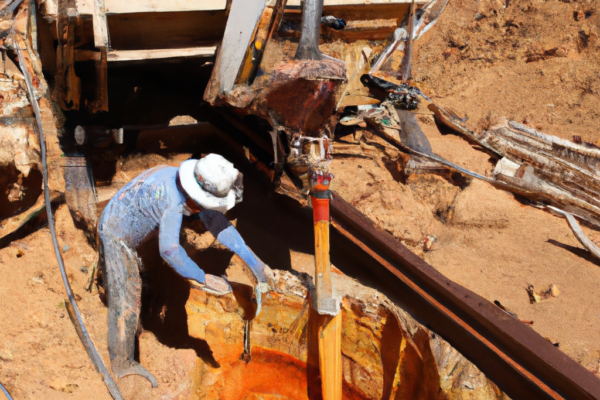
The simplest form of opal mining is by shaft sinking with a pick and shovel. A shaft is sunk straight down until some promising “opal dirt” is discovered. Length of the shaft could be as short as three metres or as long as 20 metres. A handpick or screwdriver is used to extract any opal found, due to the frailty of the stone.
Open cut mining:
Open cut method is done by the use of heavy machinery to remove large amounts of opal dirt from closer to the surface for inspection. This method is more expensive and is mostly used to search for boulder opal in Central Queensland.
Noodling:
Many locals search through heaps of discarded mullock for pieces of precious opal. An abandoned open-cut mine is another good place for a noodler, using a rake and sieve for tools. Some have taken to large scale machine noodling by allowing large amounts of opal dirt travel on a conveyer belt under ultra-violet light, which detects the precious opal.
Puddling and Rumbling:
A Puddler is a large mesh-lined drum attached to a motor. This device rotates and turns the clay into sludge as water is pumped into the drum. The sludge escapes through the mesh. A related technique is dry rumbling.
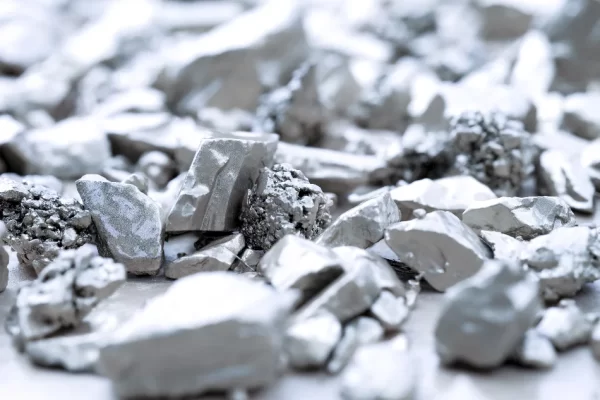
Platinum is a material which is very rare and the cost of gold is double than gold. In igneous rocks platinum is formed and these rocks also have iron and magnesium. Along with other materials like copper and gold, Platinum is also found in thin layers. Using surface and underground Platinum is mined. Due to natural calamities like wind, rain etc…platinum gets washed off and goes to the rivers and streams where through placer mining it’s mined.
In earlier days miners felt that platinum is a junky form of silver and they used to throw it away. Since it’s found in gold mine people named it as ‘white gold’. When copper and gold is mined then platinum is obtained in US. In South Africa, Russia, Columbia, Alaska, and Canada platinum is mined.
Uses of Platinum:
For surgical instruments, chemical equipment, jewelry, and catalytic converters in cars platinum is used. Platinum is metal which can be molded without any trouble and hence it’s used in wire and in items which got to be bent.
Methods of platinum mining:
By narrow reef method first platinum group metals (pgm) is extracted where miners make use of handheld pneumatic drills in order to make holes in the reef which explosives can be loaded. Through blasting when ore is released it’s taken out by making use of scrapers which is attached to wenches and transported to the surface.
The most popular and famous mining methods are New mechanical and hybrid mining. One mining procedure is of drilling either by pneumatic drills/newer specialized drilling equipment and then cleaning the ore from the mine using low-profile vehicles known as LHD (load haul dump).
Vital amounts of platinum are manufactured from the mine sites in far eastern Russia and the Norilsk-Talnakh mine which is situated in the Polar ice cap using both open-pit strip and underground mining procedures. In Zimbabwe platinum was found in the year 1925 in a place by name the Great Dyke which runs approximately north and south for about 550 kilometers through the heart of the country.
Top-rated Platinum Producers:
The underground segment which was lately opened uses deeper level extraction methods. By mechanized ramp and fill procedure 80% of platinum and palladium ore is mined and these are more or less like the LHD method in South Africa.
Platinum, palladium, rhodium, ruthenium, iridium and osmium are the six metallic elements which are called as Platinum Group Metals. At the time of mining procedure these metals are extracted and mining process frequently yields far more nickel/copper than it does for platinum because pgm is rare and also due to its tendency to merge with other metals.
South Africa is the world’s largest producer and there platinum is mined in an area called the Bushveld Igneous Complex. It was estimated that this massive ore deposit has been formed before 2000 years ago, an area of 370 kilometers. And these pgm’s are discovered in three distinct layers known as reefs where the main source of which are the Merensky Reef, first opened in the year 1925 and the Upper Group 2 (UG2) Reef, where mining started in the year 1970s.
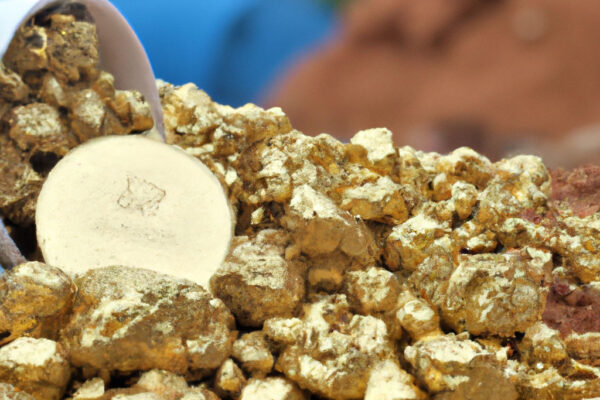
Gold mining consists of the processes and techniques employed in the removal of gold from the ground. Earlier gold was mined using different methods like Panning, cradling, dry blowing, shaft mining, Puddling and dredging. Nowadays open cut mining and underground methods are used for gold mining.
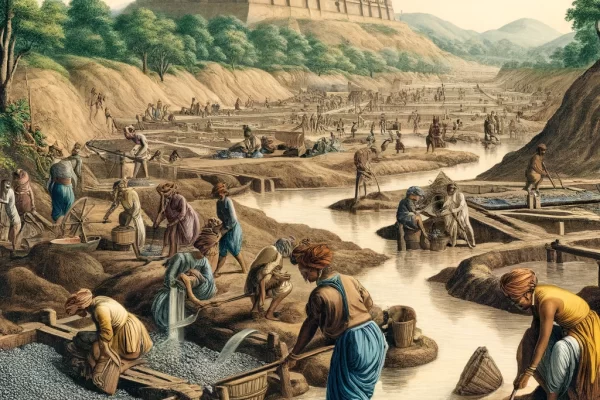
Panning is one of the oldest techniques of separating gold from rock. Gold panning technique was introduced by Isaac Humphrey at Coloma in 1848. Also Mexicans developed panning technique in their country, using a flat dish called a batea. Gold panning was slow even for most skillful miner. In a single day, one miner was able to wash only 50 pans in 12 hour workday and obtain only a small amount of gold dust. This method was the most common method of mining on the goldfields. Rocky material was loosened with pick and shovel. After it had been broken down, this rocky material was taken by wheelbarrow to a creek where it was carefully washed and swished around a shallow metal pan. As the water separated the particles of dirt, rock and pebbles, small deposits of gold sank to the bottom of the pan. This was successful for yielding small nuggets. A persistent prospector could find a considerable amount of gold over time.
Cradle (Rocker): This method was introduced by Isaac Humphrey. Cradling involves a wooden box with a handle on one side and a ridged bottom covered with Hessian cloth. Large pieces of rock were sorted through and discarded if they did not yield any gold. Finer rocks and pebbles were then washed with creek water across the ridges in the bottom of the cradle. This method was more successful then panning in that it meant that greater amounts of gravel and dirt could be examined.
Dry blowing: This method was not very effective. This method was adopted in some parts of Australia like Kalgoorli in Western Australia. In this method two pans were used. Fine, dust like material was poured from a pan held high, into the second pan which was positioned on the ground. As the material was poured down, the wind blew away the dust and fine particles of rock, while the tiny nuggets of gold fell into the pan below. While the method was sound in theory, the winds meant that tiny particles of gold could be blown away with the rest of the dust and dirt.
Shaft mining: One of the popular methods was shaft mining. To find gold from underground, miners dug a shaft of up to 50 meters deep. Most of the miners were equipped for pick and shovel, so this was considered a long and tiring task. This method was adopted when prospector was confident that there was gold in a particular place. It was very difficult to find gold in older days, because there was no proper mining equipment. Discovering gold was more a matter of luck than good judgment.
Puddling: This method was used to separate gold from clay. Small amounts of clay were dumped in a large container and were filled with water. As it was stirred with wooden stake, clay would dissolve and gold particles would sink to the bottom. Like other methods, even this method did not yield huge amounts of gold, but they were able to get a reasonable amount of gold.
Dredging:
In this method, a huge bucket would be placed in front of the dredge which would scoop vast amounts of sediment from the river bed. This method would then be carefully sifted and sorted. After the sifting was completed, waste material was returned to river bed.
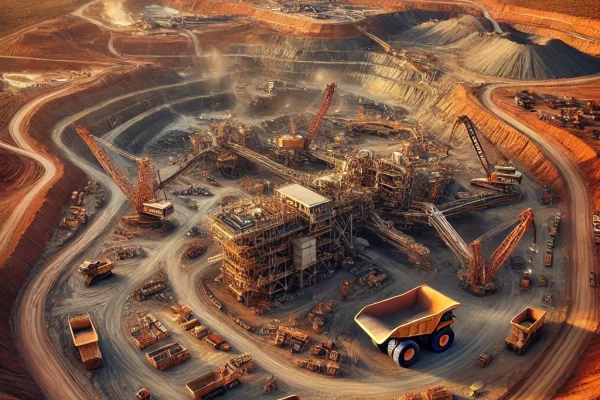
Open cut mining: In this method, rocks that are on surface are removed and moved to another place. Over a period of time, the mine is excavated in a series of layers, known as benches. Mining company does take safety measures at regular intervals within the mine to reduce the risk of rock falls. Benches allow trucks and other large vehicles to enter the site and allow drilling and ore sampling at different levels. The rocks that are removed with the help of machines are crushed and sifted through for gold. This method is very profitable because the removed rocks will at least have three to four grams of gold per tonne.
Drills and explosives are used to break the rock. Explosives like ammonium nitrate are used to break the rock. It causes less damage to nearby areas.
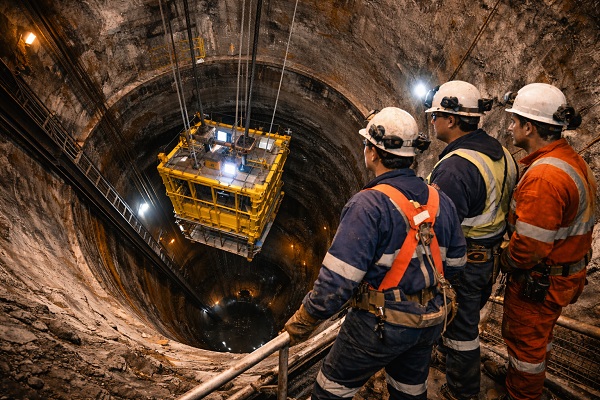
Underground Mining: In underground mining, gold is found below the surface. This method is very costly and cause dangers to mine workers. In this method, a shaft is sunk into the ground which would be 1000 meters deep. Horizontal tunnels, known as stopes are dug at various depths and the miners work along these to access the gold.
Vehicles gain access to the various levels of the mine through a spiral tunnel known as a decline. As mineshafts become deeper, the risk of cave-ins or collapses increases. Underground mines operate under strict safety protocols. These include the way the mineshafts are dug and constructed, the methods of support for the walls and ceiling of the mine and the use of special machines to provide adequate ventilation and lighting
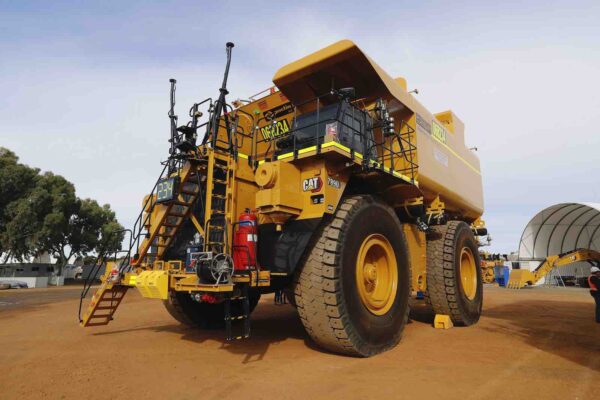
The mining industryis one of the most dangerous working environments. Mining equipments are instruments that are commonly used in extraction of minerals from the earth surface. In the past, ancient times, miners used to excavate minerals and metals by using simple hand held tools. With the introduction of automation and modernization, today’s mining world enjoys the benefit of many types of mining equipments that are used specially for mining purposes. Modern day mining equipment is powered mainly by electricity and hydraulic energy.
Mining equipments are available for various types of mining methods that are performed around the world. There are various types of mining equipments available in the world. Some of them are industrial shredders, drilling equipment, blasting equipment, drill rigs, hammers, mine winders, blasting machine, Mining Locomotive, well drilling machine, industrial crushers, cutting machines, drills, loaders, blasting devices, Track Drill, Rock Drill, etc. Some examples of mining equipment that is used extensively in mining operations are: hard hats, clothing/gear, ventilation fans, rock dusters, tractors, earth movers, water jet pumps, cutting machines, drills, loaders, blasting devices, dozers, trucks, cranes, fork lifts, draglines and many other machineries. A mining light system is important mining equipment used for all mining processes. A mining light system increases the efficiency and the speed of mining operations and guarantees optimum results in mining process. A mining light might consist of a heat sink, LED or laser, magnetic switch or a focusing cone. Gold pans, sluice boxes, metal detectors, digging tools, gold vials, snuffer bottles, etc., are equipments used for gold mining. Various kinds of large mining excavators are available for mining field. The mining excavators using advanced technology help in reaching the international level of performance in mining processes.
There are mining equipments available specifically for Surface mining processes such as open-pit mining, strip or area mining, quarrying, contour mining, mountaintop removal, and placer mining. For example, some of the Open Cast Mining Equipments are Rock Drills, Drifter, Paving Breaker, DTH Hammer, Wagon Drill, Slim Drill LD-4, Pneumatic Crawler Drill, TCT Drill Steel Grinder, and Cross Bit Grinder. There are excellent mining equipments available for Sub-surface mining processes such as shaft mining, drift mining, borehole mining, slope mining, and hard rock mining. Similarly, there are special mining equipments for deep underground mining processes such as Longwall mining, Continuous mining, Blast mining, Shortwall mining and Retreat mining. For example, some of the underground Mining Equipments are Junior Simba, Mucking Machine, Slurry Pump, Exhaust Fan, Air Mover, Cement Injection Pump, Pneumatic Power Pack, Turbo Light, Spare parts for Atlas Copco Drifter BBC-120F, Simba Junior, BMS-46 Feed Motor, BSP 10 Pneumatic Rod Catcher, Atlas Copco Cavo 310 Loader, Pneumatic Raise Climber, Eimco Loader & Hopper.
The use of right mining equipment is very essential for increased productivity. For example, the use of large mining equipment in surface mining maximizes the recovery through the excavation of one or more coal seam deposits in the large area surface mines.
Many features, restrictions and criteria need to be considered while choosing the mining equipments for a mining process. The two most important factors for choosing any type of mining equipment are its strength and durability. Cost is also an important consideration while selecting mining equipments.
Mining is a very dangerous process. If a wrong piece of equipment or tool is used for a specific mining purpose, it might lead to disaster. Therefore it is important that everybody involved in the mining operation must know exactly how to use their mining tools properly. Each worker should be properly and thoroughly trained to use every part of mining equipment they will be using. Also the workers should be educated about the safety measures in using the mining equipments.